
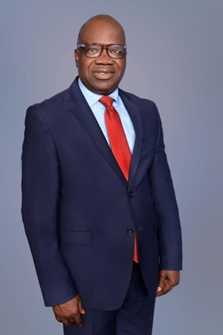
By Alex Lawrence Koroma
FREETOWN, Oct. 26, 2026 —
The Economic Community of West African States has called on Sierra Leone’s leaders and citizens to strengthen dialogue, honour peace agreements and make conflict prevention a priority as the country prepares for the 2028 general elections.
The appeal was delivered by Ambassador John Azumah, ECOWAS Resident Representative to Sierra Leone, on behalf of ECOWAS Commission President, General Birame Diop, at the National Unity and Social Cohesion Conference. The two-day conference, convened by the Independent Commission for Peace and National Cohesion (ICPNC), marks the commission’s fifth anniversary.
Addressing government officials, political leaders, traditional and religious authorities, diplomats and civil society representatives, Ambassador Azumah said the conference themed: “From Commitment to Action: Rebuilding Trust, Strengthening National Unity and Advancing Social Cohesion”, captured the work required to secure lasting peace.
He congratulated the ICPNC on its anniversary and commended its contribution to national dialogue and peacebuilding. He also noted Sierra Leone’s ranking of 57th in the Global Peace Index, describing it as a positive position within the region.
Amb Azumah praised President Julius Maada Bio’s leadership and thanked the government and people of Sierra Leone for their hospitality, resilience and cooperation in supporting peace and stability.
In five years, he said, the ICPNC had become a central institution for peace and national dialogue. Its work has included facilitating peace policies, monitoring the implementation of peace agreements and following up on recommendations from the Truth and Reconciliation Commission.
The commission also played a role in the talks that led to the signing of the Agreement for National Unity (ANU) on Oct. 18, 2023. That agreement established the Tripartite Committee, which produced 80 recommendations addressing national unity, governance and security-sector reform.
Amb Azumah further cited the ICPNC’s support for the coalition of International Moral Guarantors: ECOWAS, the United Nations Office for West Africa and the Sahel, and the Commonwealth, during its third monitoring and assessment mission on the implementation of the ANU in April 2026.
He urged stakeholders to build on these efforts by investing more in dialogue, reconciliation, governance reforms and conflict prevention. Such work, he said, could help reduce political tensions, reinforce democratic governance and make the country a better place to live.
“Prevention must be a default, not an afterthought,” Amb Azumah said, summarising one of his key messages. He called for early warning systems to lead to timely action, rather than simply identifying risks after they have emerged.
He noted that the ECOWAS Conflict Prevention Framework had placed prevention at the center of the regional organisation’s work since 2008, while Sierra Leone had developed its own national peacebuilding institutions. The challenge, he said, was to ensure that warnings about potential conflict were acted upon promptly.
The ambassador also stressed that trust depends on mutual respect and on keeping commitments. Agreements, he said, build confidence only when all parties honour them “in letter and in spirit.” He encouraged stakeholders to uphold the Agreement for National Unity, the Tripartite Committee recommendations and the Eight-Point Declaration of April 2026 as the country moves towards the 2028 elections.
ECOWAS, he said, would continue to support Sierra Leone’s peace mechanisms through regional frameworks, financial assistance, early warning systems, capacity-building programmes and electoral support. The organisation has also deployed regional missions, including ECOMIG, ECOMIB and the ECOWAS Standby Force, in support of peace and stability across member states.
Amb Azumah recalled ECOWAS’ intervention through ECOMOG to restore stability in Sierra Leone during the 1990s. He also referred to the construction of an ECOWAS logistics depot at Lungi, intended to serve as a regional hub for peace operations and the deployment of forces during emergencies.
He welcomed the first national observance, on Jan. 18 this year, of the date hostilities ceased in Sierra Leone. The commemoration, he said, was a reminder of the country’s experience and the importance of safeguarding peace.
A central theme of Amb Azumah’s address was the need for political leaders to demonstrate that peaceful engagement is possible. He pointed to President Bio’s willingness to share a platform with former President Ernest Bai Koroma and engage in reflection as an example for Sierra Leone and the wider West African region.
He also cited the return of former President Ernest Bai Koroma to Sierra Leone September 2026, which ECOWAS welcomed as a step towards national reconciliation, unity and lasting peace.
Amb Azumah said the President’s decision to refer the Constitutional Amendment Bill 2025 to the Supreme Court for an opinion, after it was passed by Parliament, was another example of choosing dialogue amid differing public views. He also referred to Bio’s statement at the United Nations General Assembly that he would hand over power to his successor after the 2028 presidential election.
“These are signs of choice of peace,” Amb Azumah said, urging citizens to embrace peace and work towards a united, cohesive and stable country.
He called for a “One Sierra Leone” approach, saying national unity was essential to peace, growth and prosperity amid global geopolitical disruptions and security pressures. Sierra Leoneans, he said, should uphold peace, reconciliation, tolerance, diversity and inclusion.
“Different tribes, different religions, same people, one country,” he said, arguing that social cohesion could not be imposed from the capital. Instead, it had to be built in provinces and chiefdoms, in mosques and churches, and in markets and classrooms. Citizens, he added, must be active participants in national life rather than spectators.
Amb Azumah said the willingness of leaders to engage in dialogue should be matched by action across society. He urged conference participants to focus on implementing outstanding peacebuilding commitments and strengthening conflict-prevention strategies ahead of the 2028 elections.
He assured participants of ECOWAS’ continued support, noting that peace in Sierra Leone was closely connected to stability across the region. That commitment, he said, aligned with the ECOWAS Vision 2050 agenda, “Peace and Prosperity for All,” and its goal of building an integrated, peaceful, prosperous and inclusive community of peoples.
The conference was expected to produce practical recommendations on national unity, social cohesion and the implementation of existing peace commitments. Ambassador Azumah urged delegates to deliberate openly and constructively, expressing hope that the outcomes would advance unity and stability.
He concluded by calling for peace to prevail in Sierra Leone and across the ECOWAS region, and wished participants fruitful discussions.