By: Alimatu Kargbo
A bold new strategy to transform Sierra Leone’s adult education landscape was unveiled Thursday, as the Sierra Leone Adult Education Association (SLADEA) launched its 2026–2030 Strategic Plan at Jones Street in Freetown.
The ambitious roadmap tackles four interlinked national crises: adult illiteracy, youth unemployment, weak civic participation, and climate vulnerability.
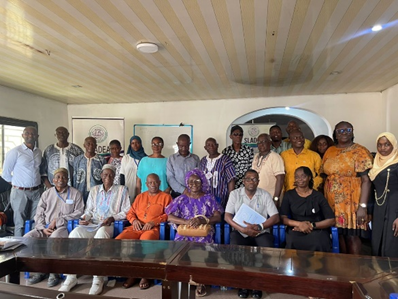
The launch drew government officials, development partners, media representatives, and education stakeholders, all united behind a central message that education, inclusion, and collaboration are non-negotiable for national progress.
Delivering a keynote reflection, Professor Joe A.D. Alie placed the strategic plan within Sierra Leone’s broader democratic journey.
“Democracy thrives not on uniformity of opinion, but on a shared commitment to work together despite differences,” Prof. Alie said. He urged political actors and citizens to rebuild trust and prioritize national unity ahead of future elections, linking education and civic engagement directly to peace, stability, and democratic credibility.
Speaking on behalf of the technical team, Daniel T. Fullah outlined the plan’s three priority areas:
Inclusive Education and Skills Development, Functional literacy, digital education, financial literacy, and vocational training. “Empowering women with financial literacy directly impacts household income, business management, and community development,” Fullah explained.
He added that Governance and Peacebuilding Strengthening citizens’ capacity to engage in governance, promoting community dialogue, and equipping individuals with negotiation and leadership skills.
He continued that Climate Resilience & Sustainable Livelihoods, Environmental education, agroforestry, climate-smart farming, and alternative livelihoods contribute to reduce deforestation and charcoal production.
Mohammed A. Bah stressed that literacy and skills are fundamental tools enabling individuals to transition “from marginalization to active contributors.”
David Kamara argued for community-led approaches: “Development initiatives are more sustainable when communities take ownership.”
Alhajie S.K. Mansaray reflected on SLADEA’s evolution from modest radio-based literacy initiatives to a structured organization with regional collaborations and a comprehensive five-year framework, “a clear sign of growth and institutional maturity.”
A Ministry of Education representative affirmed the plan’s alignment with national non-formal education priorities, while Adenike Cole of the Civil Peace Service Network noted that “sustainable peace can only be achieved when diverse voices are included.”
The strategic plan aims to directly impact at least 10,000 individuals over five years, with indirect reach projected to hundreds of thousands more through household and community-level interventions.
As stakeholders departed, the collective warning was clear: a strategic plan is only as effective as its implementation. Turning vision into reality, they agreed, will demand commitment, collaboration, and sustained effort from all sectors of society.