
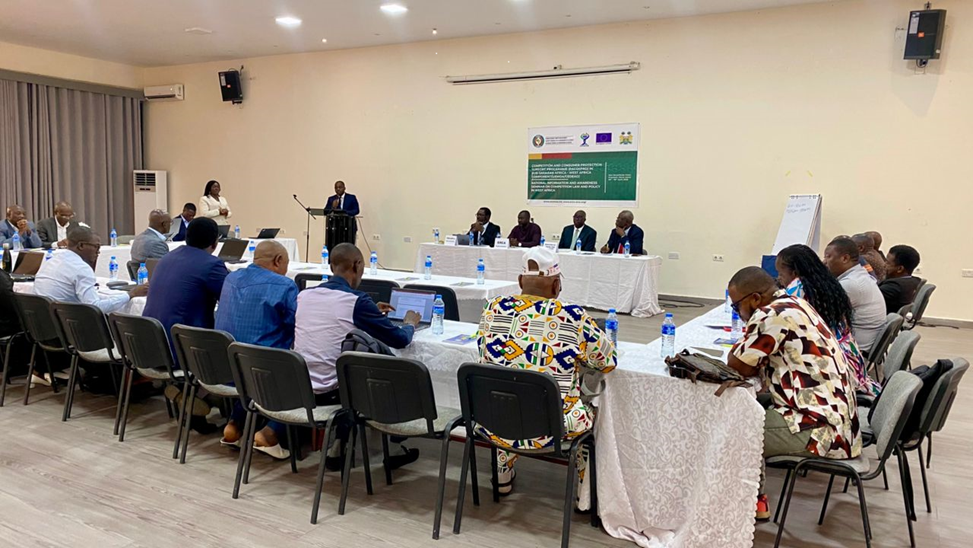
The conference hall at New Brookfields Hotel buzzed with quiet anticipation as policymakers, business leaders, and regulators took their seats. Outside, the city of Freetown moved at its usual rhythm, but inside, something more deliberate was unfolding—an effort to reshape how business is done across West Africa.
At the center of this effort stood the ECOWAS Regional Competition Authority, widely known as ERCA. Though newly operational since October 2024, its presence was already being felt across the region. Tasked with enforcing fair competition rules among all fifteen ECOWAS member states, ERCA was designed to address long-standing challenges—cartels, monopolistic behavior, and complex cross-border mergers that once slowed economic progress.
For many businesses operating beyond their national borders, ERCA represented a turning point. No longer would they need to navigate a maze of separate national filing systems. Instead, ERCA now served as a “one-stop shop,” streamlining merger processes and significantly reducing administrative burdens. It was a quiet revolution in regional trade—one that promised efficiency, transparency, and fairness.
As the seminar began, a representative of the Authority, Yahya Samateh, stepped forward. His voice carried the weight of both responsibility and optimism. He spoke about ERCA’s mandate—not just as an enforcer of rules, but as a guardian of market integrity. Fair competition, he explained, was not an abstract ideal; it was the mechanism through which businesses thrive, innovation flourishes, and consumers are protected.
His remarks set the tone for the day. The seminar, part of ERCA’s broader campaign, was one of several national engagements aimed at raising awareness and ensuring compliance. These gatherings were carefully designed—not merely as lectures, but as conversations between regulators and stakeholders. Public officials, private sector actors, and civil society representatives all had a role to play in building a competitive and fair marketplace.
Later, Leonard Ouonye Ugbajah took the floor, offering deeper insight into the Authority’s operations. He highlighted the ECOWAS Regional Competition Framework, explaining how it provided the legal backbone for ERCA’s work. Of particular importance was the activation of merger control regulations in October 2024—a milestone that allowed the Authority to actively monitor and regulate market behavior across borders.
His explanation was precise yet accessible, bridging the gap between legal complexity and practical understanding. For many in the room, it clarified not only what ERCA does, but why it matters.
The highlight of the event came when Sierra Leone’s Minister of Trade and Industry, Alhaji Ibrahim Sesay, addressed the audience. Standing before a backdrop of regional flags, he spoke not just as a national leader, but as part of a larger West African vision.
He emphasized the significance of the initiative, noting that fair competition is the backbone of any thriving economy. In his words, it is where integrity meets opportunity—where innovation is rewarded, and every business, regardless of size, has a chance to succeed.
His message resonated deeply. In a region rich with potential yet often challenged by fragmented systems, ERCA symbolized unity through structure. It was more than a regulatory body; it was a commitment to doing business differently—fairly, transparently, and collectively.
As the seminar drew to a close, conversations lingered in the corridors. Attendees exchanged ideas, asked questions, and considered what this new framework would mean for their industries. The impact of the day was not confined to speeches or presentations—it lived on in those discussions, in the gradual shift toward understanding and compliance.
Beyond the walls of the conference hall, the implications were even greater. With ERCA guiding competition policy across borders, West Africa was taking a decisive step toward economic cohesion. Markets would be more predictable, businesses more accountable, and consumers better protected.
In that moment, the vision became clear: a region where rules are not barriers, but bridges—connecting nations, empowering enterprises, and ensuring that growth is shared.
Through unity and clear regulation, ERCA was not just enforcing competition—it was shaping the future of West Africa’s economy.