Govt & Private Sector Foster Plastic Revolution
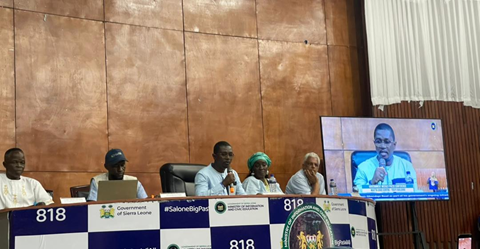
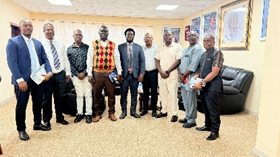
At the weekly press conference organized by the Ministry of Information and Civic Education on 28 April 2026 at the Miatta Conference Centre, key stakeholders from the private sector and government came together to address one of the country’s most pressing environmental challenges, plastic waste management. The event featured statements from Walid Bahsoon, Managing Director of Premier Environment Solutions Ltd; Swaliho Kanneh, Business Development Executive at Alphatek Global SL Limited; and Mima Yema Mimi Sobba-Stephens, Deputy Minister of Environment and Climate Change.
In his contribution, Walid Bahsoon, Managing Director of Premier Environment Solutions Ltd, highlighted how his company is transforming plastic waste into valuable construction materials such as pavement tiles and building blocks. He explained that the company operates a community-based collection model, sourcing plastic waste from households, beaches, and individuals, while paying collectors for their contributions. According to him, this approach not only reduces environmental pollution, but also creates economic opportunities for low-income communities.
“Plastic waste has value,” Bahsoon emphasized. “When people understand that they can earn from waste, they stop throwing it away and start collecting it.”
He further noted that the company purchases plastic at an average rate of one euro per kilogram. However, due to the lightweight nature of plastics and high transportation costs, maintaining affordability remains a challenge. Despite this, the company produces construction materials that are stronger, more durable, and cheaper than traditional cement alternatives.
Bahsoon also stressed that beyond business, the company sees its work as a civic responsibility. He called for greater public awareness, especially around waste separation at the household level, noting that poor sorting increases operational costs for recyclers.
In his statement, Swaliho Kanneh, Business Development Executive at Alphatek Global SL Limited, focused on the importance of policy support, innovation, and behavioral change in addressing plastic waste challenges. He referenced collaborations with institutions such as the World Bank and the African Development Bank, noting that such partnerships are helping to shape policies and provide financing opportunities for recycling initiatives.
Kanneh emphasized that while policy frameworks are important, the shift must also happen at the level of everyday consumer behavior. He encouraged the use of alternatives such as paper bags and reusable materials, stating that reducing dependence on single-use plastics requires both awareness and accessibility.
“It is not just about banning plastics,” he explained. “It is about managing the transition, building the systems, the technology, and the mindset needed to support that change.”
He also underscored the role of associations and collective action among recyclers, pointing out that stronger coordination can help improve waste collection systems, promote proper sorting, and attract financial support for the sector.
Kanneh further highlighted the importance of early education, noting that instilling environmental awareness in children can drive long-term cultural change. “If a child learns the value of recycling, they will influence their household and community,” he said.
Delivering the government’s perspective, Deputy Minister, Mima Yema Mimi Sobba-Stephens, reaffirmed the government’s commitment to strengthening environmental policies and supporting recycling initiatives across the country.
She pointed to ongoing efforts within the Ministry of Environment and Climate Change to develop and implement policies that encourage recycling, including incentives for private sector participation such as tax relief and improved access to financing.
The Deputy Minister also highlighted the significance of green public procurement, explaining that government projects could require contractors to source a percentage of their materials from recycling companies. This, she noted, would create a stable market for recycled products and accelerate industry growth.
Sobba-Stephens acknowledged that changing public attitudes remains a major challenge, but expressed optimism that sustained awareness campaigns and collaboration between government, private sector, and communities will drive progress.
The press conference underscored a shared vision among stakeholders: transforming plastic waste from an environmental burden into an economic opportunity. While challenges such as infrastructure gaps, high operational costs, and public resistance persist, the combined efforts of government and private sector actors signal a growing commitment to sustainable solutions.
As Sierra Leone continues to navigate its path toward effective waste management, one message was clear, real change will depend not only on policies and innovations, but also on a fundamental shift in how society values and manages plastic waste.