

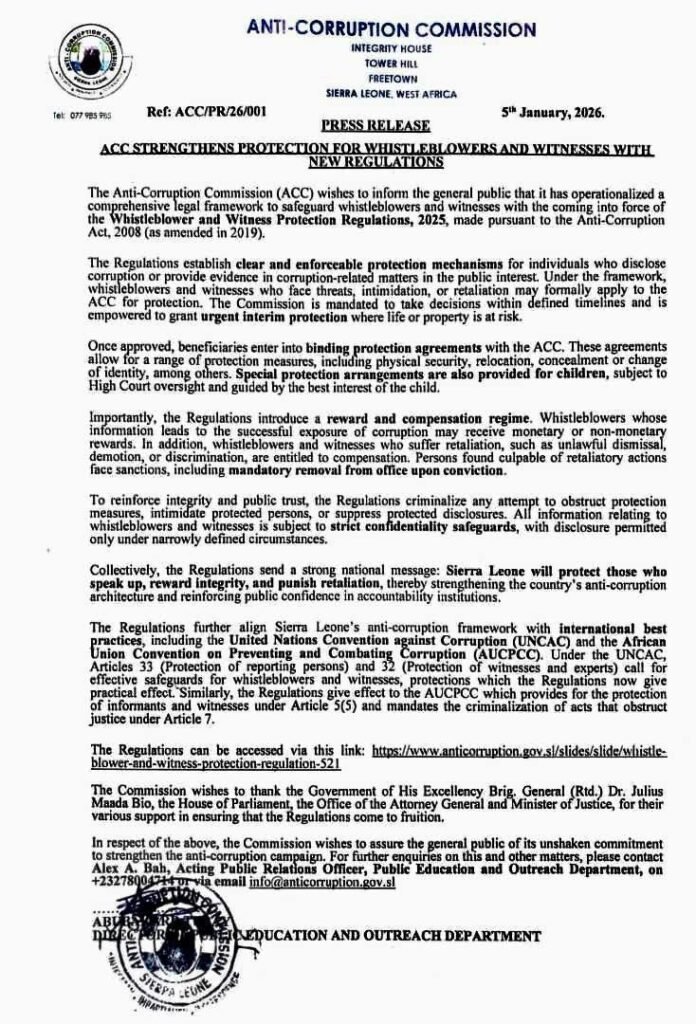
The Anti-Corruption Commission (ACC) has put into effect new regulations aimed at protecting whistleblowers and witnesses who report corruption or provide evidence in corruption cases.
The Whistleblower and Witness Protection Regulations, 2025, made under the Anti-Corruption Act, set out clear procedures for individuals who face threats, intimidation, or retaliation because they disclosed information in the public interest. Those affected can apply directly to the ACC for protection.
The rules require the Commission to make decisions within fixed timelines and allow for urgent interim protection where there is an immediate risk to life or property. Once approved, beneficiaries enter formal protection agreements with the ACC, detailing the measures to be provided. Where children are involved, protections are subject to High Court oversight.
The regulations introduce a reward and compensation system. Whistleblowers whose information leads to the exposure of corruption may receive rewards. Whistleblowers and witnesses who suffer retaliation — including dismissal, demotion, or discrimination — are entitled to compensation. Retaliation against protected persons is now an offence and may result in removal from office upon conviction.
The framework also criminalises attempts to obstruct protection measures, intimidate protected individuals, or suppress protected disclosures. All information relating to whistleblowers and witnesses is subject to strict confidentiality, with disclosure allowed only in limited circumstances.
The ACC says the regulations align Sierra Leone’s anti-corruption laws with international standards, including the United Nations and African Union anti-corruption conventions.
The regulations are now in force and accessible on the Commission’s website.