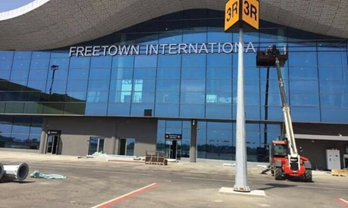
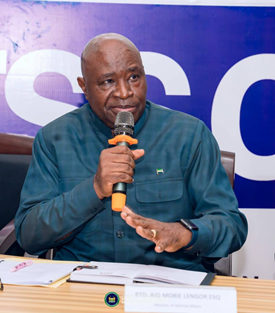
made by Sierra Leone’s Ministry of Internal Affairs: the temporary suspension of the USD 25 Airport Security Fee at Freetown International Airport. This suspension, ordered apparently on behalf of the Government of Sierra Leone, is set to last for six months, as revealed in a leaked internal memo from the Ministry. While at face value this might appear as a routine administrative measure, the move raises critical questions about governance, contractual obligations, and the potential ramifications on Sierra Leone’s international business relationships.
To understand the gravity of the suspension directive, one must first appreciate the context. Since March 2012, the Government of Sierra Leone has had a binding contract with Securiport—a US-based company contracted to upgrade and manage the Immigration Control System at Freetown International Airport. Over the past fourteen years, Securiport has successfully implemented significant technological and procedural improvements that have profoundly enhanced airport security and immigration control.
The USD 25 Airport Security Fee charged to passengers is the primary mechanism through which Securiport recoups its investment and operational costs under this public-private partnership. It is disbursed at the point of exit at the airport, an arrangement that has sparked public dissatisfaction due to perceived inconvenience and complexity. However, crucially, no accusations have been made against Securiport regarding breach of contract or non-performance in delivering on their obligations.
The Ministry of Internal Affairs justified the suspension on two grounds. First, it would facilitate ongoing independent verification and a special audit being conducted by the Audit Service Sierra Leone on Securiport’s operations. Second, the Ministry expressed an intention to evaluate a “more seamless, integrated system of collection” aimed at eliminating public inconveniences and addressing widespread traveler dissatisfaction with the current fee collection mechanism.
While these reasons seem valid on the surface, one cannot help but question the logic of halting the entire fee collection for six months solely to conduct an audit. Audits are standard procedures frequently performed without disrupting revenue streams, particularly when contracts and service delivery are still in effect. Why then was the collection suspended rather than allowed to continue during the audit? Was this truly necessary?
Moreover, why have other concerned authorities such as the Ministry of Transport and Aviation or the Sierra Leone Civil Aviation Authority (SLCAA) not implemented existing proposals that could render fee collection less intrusive? As early as September 18th, 2017, the SLCAA issued a directive to all airlines instructing them to collect the Airport Security Fee at the point of ticket sale, using a special Tax Code K5. This idea was welcomed by stakeholders, including Brussels Airlines, precisely because it aimed to alleviate passenger complaints about the payment process. Yet, this directive has yet to be enforced, compounding frustrations among travelers.
This seemingly technical and administrative issue carries far-reaching implications. A famous British politician once remarked, “When you choose an action, you choose the consequences of that action.” The government of Sierra Leone should heed this maxim carefully before moving forward.
A case in point is the fallout from the cancellation of the mining license of SL Mining in 2019. That decision triggered an expensive and protracted legal battle, forcing the government to spend millions of US dollars defending itself in international arbitration held in the United Kingdom. Though ultimately settled out of court, the dispute damaged investor confidence and underscored the financial and reputational risks of disregarding contractual obligations.
Likewise, the contract with Securiport is governed by international commercial law and includes provisions that protect both parties in dispute resolution scenarios. Suspending the Airport Security Fee unilaterally, even temporarily, exposes Sierra Leone to claims of breach or interference, especially if viewed as a failure to honor contract terms.
Dr. Enrique Segura, President and CEO of Securiport, has conveyed his company’s position clearly and emphatically. Responding to the Ministry’s directive, Dr. Segura stated that Securiport would comply “under protest and without prejudice,” explicitly reserving the right to contest any implications that the suspension aligns with the government’s contractual obligations.
This nuanced response signals that while Securiport does not intend to escalate the matter immediately, it remains wary of the potential legal and financial consequences and may pursue remedies if necessary.
Beyond legalities, this suspension threatens to strain Sierra Leone’s diplomatic rapport with the United States, given Securiport’s origins as a US-based company. Political realities in Washington, notably under the unpredictable leadership of President Donald Trump, underscore how sensitive and consequential such matters can be on the international stage.