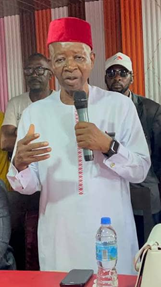
On Constitutional Reform, Electoral Reform, and the Preservation of National Unity
We offer this advice as a voice of conscience, peace, and national responsibility at a moment when our beloved Sierra Leone is experiencing serious disagreement over constitutional and electoral reform.
I do not speak for any political party, nor do I seek to determine political questions that properly belong to the constitutional institutions of the Republic. My concern is the preservation of constitutional order, democratic legitimacy, national peace, and the unity of our people.
Sierra Leone is greater than any political party, government, opposition, Parliament, or individual political leader. Political authority is temporary; but our nation endures.
1. The Constitution must remain our common ground
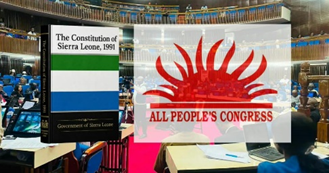
The 1991 Constitution of Sierra Leone, Act No. 6 of 1991, is the fundamental legal framework within which our democratic institutions operate.
We therefore urge all political actors to approach the present controversy not from the standpoint of political advantage, but from the standpoint of constitutional fidelity.
The discussion surrounding Section 91 and Section 108 requires particular care. Section 91(1) concerns voting on parliamentary business generally, while Section 108 provides a special constitutional procedure concerning constitutional alteration.
These provisions should not be presented as if one necessarily cancels the other. Rather, they should be interpreted harmoniously, with the general rule applying to matters within its proper scope and the specific constitutional safeguard applying wherever the Constitution requires it.
Where the Constitution prescribes a higher threshold, that threshold must be respected. Where ordinary parliamentary business is properly governed by the general rule, that rule should likewise not be unnecessarily displaced.
The Constitution must never become an instrument of convenience for either Government or Opposition.
2. Electoral reform deserves serious and inclusive consideration
I recognize that the recommendations arising from the Truth and Reconciliation Commission and the subsequent Tripartite process have generated important national discussion about the nature of our electoral system, including the proposal to move from the First-Past-the-Post system toward a form of Proportional Representation.
This is a legitimate matter for national consideration.
At the same time, the adoption of a different electoral system is not merely a technical change in the method of counting votes. It can affect representation, political parties, constituencies, parliamentary composition, accountability, inclusion, and the relationship between citizens and those who represent them.
For that reason, electoral reform should not be rushed, imposed, or reduced to a contest over which political party is likely to benefit.
The central question should be:
What electoral system will best serve the democratic interests of the people of Sierra Leone?
3. Recommendations are not a substitute for constitutional process
The TRC recommendations and Tripartite recommendations deserve respect and serious consideration. However, recommendations, political agreements, or national consultations do not by themselves amend the Constitution.
Where implementation requires constitutional alteration, the constitutional amendment procedure must be followed faithfully.
Where legislation can lawfully implement a reform without altering a constitutionally protected provision, the appropriate legislative process should be followed.
The distinction must be maintained.
We therefore caution against any attempt—by Government or Opposition—to treat political agreement as automatically equivalent to constitutional authority.
4. A parliamentary majority carries responsibility, not merely power
We respectfully remind those who hold the majority in Parliament that a numerical majority is an important instrument of democratic government, but it also carries a special responsibility.
A majority should not merely ask:
“Can we pass this?”
It should also ask:
“Is the constitutional basis clear? Is the process inclusive? Will the decision strengthen public confidence? Would we accept the same procedure if we were in Opposition?”
Democracy is not simply majority rule. It is majority rule within constitutional limits, with respect for minority rights and legitimate opposition.
5. The Opposition also carries constitutional responsibility
I equally appeal to the Opposition.
The right to disagree is fundamental to democracy. Parliament must provide room for robust disagreement, scrutiny, criticism, and dissent.
However, disagreement should remain within democratic and constitutional channels.
A parliamentary walkout may communicate profound disagreement, but it should not become a permanent substitute for participation, dialogue, legal argument, and institutional engagement.
We therefore encourage the Opposition to place its constitutional objections clearly on the parliamentary record and to pursue every peaceful and lawful avenue available for resolving them.
6. I caution against politicising the Constitution
One of the greatest dangers facing a young democracy is the temptation for each political side to interpret the Constitution according to its immediate interests.
The Constitution must mean the same thing when one party is in Government as when that party is in Opposition.
Today’s majority may become tomorrow’s minority.
Today’s opposition may become tomorrow’s government.
Therefore, the constitutional principle we defend today must be one that we are prepared to live under tomorrow.
7. Constitutional uncertainty should be resolved constitutionally
Where genuine uncertainty exists regarding the relationship between Sections 91 and 108, or regarding the constitutional procedure necessary to implement electoral reform, the country should not be left to competing political interpretations.
We encourage the competent constitutional and legal institutions to provide authoritative clarification.
If necessary, the matter should be subjected to appropriate judicial or other constitutionally recognized interpretation.
There should be no shame in seeking legal clarification. Indeed, seeking authoritative clarification is a sign of constitutional maturity.
8. We urge Government not to confuse urgency with haste
Electoral reform may be important and may indeed require action. But important reform does not become less legitimate because it takes the time necessary to establish consensus, legality, and public confidence.
We therefore appeal to the Government:
Do not allow political urgency to become constitutional haste.
A reform that is legally sound but perceived as imposed may generate resistance.
A reform that enjoys broad political participation, constitutional legitimacy, transparency, and public understanding has a much greater chance of enduring.
9. I urge citizens not to allow political disagreement to divide our nation
We appeal particularly to ordinary citizens.
Do not allow political leaders to persuade you that your fellow Sierra Leonean is your enemy because he or she belongs to another political party.
The APC is part of Sierra Leone.
The SLPP is part of Sierra Leone.
Other political parties are part of Sierra Leone.
Those who support Government are Sierra Leoneans.
Those who oppose Government are also Sierra Leoneans.
Our political differences must never become a justification for hatred, violence, intimidation, religious division, ethnic hostility, or the destruction of our democratic institutions.
10. My appeal for dialogue
I respectfully call upon the Government, Opposition, Parliament, traditional leaders, we religious leaders, civil society, the legal profession, and other stakeholders to create space for structured and sincere national dialogue on the proposed electoral and constitutional reforms.
Such dialogue should seek not merely to produce agreement, but to establish:
– constitutional legality;
– transparency;
– inclusiveness;
– institutional legitimacy;
– public understanding;
– political confidence; and
– long-term national stability.
The objective should not be for one side to defeat another.
The objective should be to find a solution that Sierra Leone can live with.
My Final Appeal
I therefore appeal to the Government and Opposition alike:
Do not win the argument and lose the nation.
Do not allow a disagreement over electoral reform, parliamentary procedure, or constitutional interpretation to become a crisis of national unity.
Let the Government exercise power with humility.
Let the Opposition exercise dissent with responsibility.
Let Parliament exercise its authority with constitutional discipline.
Let the courts and other competent institutions exercise their constitutional responsibilities without political pressure.
Let citizens demand accountability without hatred.
And let all of us remember that Sierra Leone is bigger than the political moment in which we find ourselves.
The Constitution should not be changed merely because it is convenient to do so, nor should necessary reform be rejected merely because it may benefit a political opponent.
Let us therefore pursue reform where reform is justified, but pursue it lawfully, transparently, inclusively, peacefully, and in accordance with the Constitution.
As a spiritual leader in this our beloved nation, Sierra Leone, my prayer and our godly advice are that wisdom will prevail over political expediency, dialogue over confrontation, reconciliation over division, and the national interest over partisan advantage.
May God grant our leaders wisdom, our institutions courage, and our people the grace to disagree without becoming enemies.
May Sierra Leone remain one nation, united in peace, justice, constitutional order, and democratic hope. Land that we love, our Sierra Leone…..
Bishop J Archibald Cole
General Overseer/Presiding Bishop
New Life Ministries International
Miracle City, Rose Road
Freetown, Sierra Leone