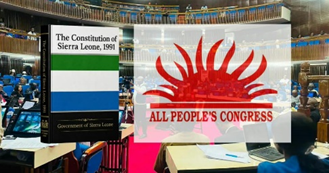
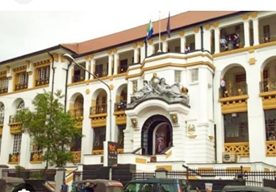
The political and legal landscape of Sierra Leone has been significantly shaken following the filing of two high-profile constitutional cases by the opposition All People’s Congress (APC). The cases, lodged before the Supreme Court, challenge the legality and procedural integrity of the passage of the Sierra Leonean Constitution (Amendment) Bill, 2025. These filings mark a pivotal moment in the country’s ongoing constitutional debate, with potential implications for the future of Sierra Leone’s democratic reforms and the rule of law.
The controversy revolves around the passage of the Constitution (Amendment) Bill, 2025, which seeks to introduce sweeping changes to Sierra Leone’s constitutional and electoral architecture. Among the proposed amendments are a reduction in the presidential election victory threshold from 55% to a simple majority of 50% plus one, the institutionalization of proportional representation as the standard electoral system for Parliament, a mandated 30% quota for women in political nominations, and expanded eligibility for dual citizens to contest parliamentary seats and hold public office.
These reforms have ignited intense political debate and public scrutiny, with supporters arguing that they are necessary to modernize and diversify Sierra Leone’s political landscape, while opponents warn that the amendments could undermine electoral integrity and constitutional stability.
The APC’s decision to take the dispute before the Supreme Court underscores the seriousness of the controversy. The opposition party has filed two separate cases, each seeking different forms of judicial intervention, but both centered on the validity of the amendment process and the actions taken during Parliament’s deliberations.
1. The First Case: Interpretation of Constitutional Provisions
The first case, jointly filed by the APC, Minority Leader Hon. Abdul Kargbo, and Deputy Minority Leader Hon. Daniel Koroma, seeks the Court’s interpretation of key constitutional provisions related to amendments. The defendants in this case include the Speaker of Parliament, Hon. Segepoh Thomas; the Attorney-General and Minister of Justice; and the Clerk of Parliament.
The core legal issue concerns the application of Sections 108, 91, and 51 of the 1991 Constitution. The applicants argue that the procedural thresholds and requirements for passing a constitutional amendment, particularly the two-thirds support mandated under Section 108(2)(b), must be strictly adhered to. They contend that the interpretation of the voting requirement by Parliament’s presiding officers, which seems to have been based on a simple majority of members present and voting, is inconsistent with the constitutional provisions.
The applicants are requesting the Supreme Court to clarify how these sections should be interpreted and applied during the amendment process, aiming to establish a clear legal standard that must be followed in future constitutional reforms.
2. The Second Case: Challenging the Validity of Actions During the August 10, 2026, Sitting
The second case was filed by Hon. Osman Abdal Timbo, a sitting Member of Parliament, in his personal capacity. Represented by former Attorney-General Hon. Joseph Fitzgerald Kamara, this case challenges the specific procedural actions taken by the Speaker of Parliament during the controversial August 10, 2026, sitting.
During that session, opposition Members of Parliament (MPs) staged a walkout before the vote on the amendment bill. Despite this, the Speaker declared the bill passed, based on an interpretation that the support required was a majority of members present and voting, rather than the two-thirds of the entire Parliament’s membership explicitly mandated by the Constitution.
Given that Parliament comprises 149 members, the two-thirds threshold would require at least 100 affirmative votes. Critics argue that the Speaker’s interpretation—claiming that a simple majority of those present sufficed—violates the constitutional requirement and undermines the legislative process.
Hon. Timbo’s legal challenge raises questions about whether the Speaker’s actions and subsequent declaration of passage were consistent with the constitutional requirements. It also questions the legitimacy of the process, emphasizing that the procedural irregularities could invalidate the bill’s passage altogether.
This legal dispute has placed the constitutionality of the amendment process at the heart of Sierra Leone’s current political discourse. The cases have garnered attention from legal practitioners, political actors, and civil society groups, all scrutinizing the procedural and substantive legality of the recent parliamentary proceedings.
Lawyers such as Melron Nicol-Wilson have publicly argued that the process was invalid. Nicol-Wilson contends that the failure to meet the constitutional voting threshold renders the passage of the bill legally null and void. Similarly, the Sierra Leone Lawyers’ Society has expressed concern over the interpretation of Section 108(2)(b), emphasizing that constitutional amendments must receive support from at least two-thirds of the full membership of Parliament, not just a majority of those present.
The controversy over the voting threshold has prompted the Speaker to formally refer the constitutional question to the Supreme Court for resolution. This move underscores the importance of judicial clarification in settling the matter and ensuring adherence to constitutional norms.
Beyond procedural issues, the amendments proposed in the 2025 Bill have profound implications for Sierra Leone’s electoral and political landscape. The reduction of the presidential election threshold from 55% to 50% plus one is seen as a move to facilitate easier presidential victories, especially in a polarized political environment. Critics warn that this could diminish the quality of electoral mandates and increase the likelihood of contested outcomes.
The institutionalization of proportional representation aims to diversify political representation, potentially empowering smaller parties and marginalized groups. Meanwhile, the proposed 30% quota for women seeks to boost gender inclusivity in political nominations, aligning Sierra Leone with international standards on gender equality in politics.
Expanding dual citizenship rights for parliamentary candidates is viewed as a move to promote inclusivity but also raises concerns about national loyalty and security, especially considering the historical context of dual nationals holding public office.
The Supreme Court is expected to schedule hearings on these cases in the coming weeks. The justices will be tasked with interpreting the relevant constitutional provisions and determining whether the parliamentary process for passing the amendment bill was lawful. Their rulings could either uphold the legitimacy of the amendments or invalidate the process on procedural or substantive grounds.
The outcome of these cases could have far-reaching consequences, potentially delaying or even halting the implementation of the proposed reforms. It could also set important legal precedents regarding the interpretation of constitutional thresholds and the limits of parliamentary power in Sierra Leone.
Conclusion
The filing of these two constitutional cases by the APC marks a critical juncture in Sierra Leone’s constitutional and political history. It underscores the importance of adherence to constitutional norms and the vital role of the judiciary in safeguarding democratic processes. As the Supreme Court prepares to deliver its rulings, Sierra Leoneans await a definitive resolution that will not only determine the fate of the 2025 amendments but also reinforce the rule of law and constitutional integrity in the country.
The cases highlight the ongoing tension between political reform efforts and constitutional safeguards, emphasizing that legal processes must be transparent, fair, and in strict compliance with the law. The coming weeks will be crucial in shaping the nation’s constitutional future and ensuring that Sierra Leone’s democracy remains resilient and rooted in the rule of law.