As the United Nations elects 5 judges to the International Court of Justice on November 3, member states should vote for both of Africa’s exceptionally qualified candidates.
On November 3, the UN General Assembly and the Security Council will vote, concurrently but separately, to fill 5 of the 15 seats on the International Court of Justice for the 2027–2036 term. There are 9 candidates for those 5 seats. To be elected, a candidate needs an absolute majority in both bodies: 97 votes in the 193-member Assembly and 8 of 15 in the Council. It is important to note that Africa has no permanent seat on the Council and is underrepresented in the non-permanent category, a situation that leaders of UN member states have described as a historical injustice. The result of this election will therefore not only shape the world’s highest court for 9 years; it will also test whether the UN membership is prepared to match its words on equitable representation with its votes.
Today, the 15 judges of the Court are distributed across the 5 UN regional groups as follows: Africa, 3 (20%); Asia-Pacific, 4 (26.7%); Eastern Europe, 2 (13.3%); Latin America and the Caribbean, 2 (13.3%); and the Western European and Others Group, 4 (26.7%). Measured against the size of each group (Africa, 54 member states, or 28% of the membership; Asia-Pacific, 53 or 27.5% of; Eastern Europe, 23, or 11.9%; Latin America and the Caribbean, 33, or 17.1%; and the Western European and Others Group, 29, or 15%), the imbalance is starkest for Africa.
The arithmetic of the 2026 election is therefore straightforward. The Western group has 2 candidates, both from permanent members of the Security Council: the United Kingdom and France. If both are elected, the group would rise to 5 seats, or 33.3% of the bench, although its 29 states, counting the United States, make up only about 15% of the UN membership. Add Eastern Europe’s 2 seats, and 52 states in total, about 27% of the membership, would hold 7 of the 15 seats, or 46.7% of the bench.
Africa, with 54 member states and 28% of the membership, would remain at 3 seats, or 20%, if member states divide their votes between the continent’s candidates. Depending on how the remaining votes fall, Asia-Pacific, with 53 states and 27.5% of the membership, would be left with 3 or 4 seats (20% to 26.7%). Latin America and the Caribbean, with 33 states and 17.1% of the membership, would be left with 1 or 2 (6.7% to 13.3%).
This would be grossly unfair to Africa.
Let me be clear about what this is not. It is not a complaint about any individual candidate. Those nominated from the Western group, from Asia-Pacific and from Latin America are equally accomplished jurists. The Statute of the Court requires judges to be persons of high moral character who possess the qualifications for the highest judicial offices in their countries or are jurisconsults of recognized competence in international law. In this race, competence is not in question. Where competence is not in question, representation must be.
The Statute itself says so. Article 9 directs the electors to bear in mind not only that each candidate should individually possess the required qualifications, but also that “in the body as a whole the representation of the main forms of civilization and of the principal legal systems of the world should be assured.” Africa is home to common law, civil law, Islamic law and customary legal traditions, and to many systems that blend them.
African states have also placed their trust in the Court time and again, from Cameroon v. Nigeria (judgment in 2002) and the Democratic Republic of the Congo v. Uganda (2005, with reparations decided in 2022) to Somalia v. Kenya (2021) and The Gambia v. Myanmar (filed in 2019). In June 2026, the Democratic Republic of the Congo instituted new proceedings against Rwanda. A continent that brings so much to the Court’s docket and to the development of international law should be properly reflected on its bench. Fair representation would enhance the Court’s legitimacy, and the system of judges ad hoc is no substitute for it.
The distribution of seats on the Court is a matter of practice, not law, and practice can change. For much of the Court’s history, the informal allocation mirrored the composition of the Security Council. That pattern has already shifted. Recent outcomes show that the bench reflects the votes of member states, not an entitlement. Africa’s share, however, has not moved from 3.
The message to UN member states is simple. The African candidates are not in competition with one another for a single seat, and Africa cannot be satisfied with 3 seats. Sierra Leone is a proponent of that position, as its Foreign Minister stated in a recent briefing to the African Group. This is fitting, as Sierra Leone coordinates the African Union Committee of Ten (C-10) on Security Council reform.
In November 2025, Africa’s candidates contested a single vacancy against one another, and the General Assembly needed 4 rounds of voting to decide it. That was a fair contest for 1 seat. This time, 5 seats are open. There is no reason for Africa to be limited to 1 of them. Four seats out of 15 would give Africa 26.7% of the bench, still slightly below its 28% share of the UN membership. That is not a special favor. It is proportion. It is equitable geographical distribution.
This appeal is not only to African states but to member states in Asia-Pacific, in Latin America and the Caribbean, in Eastern Europe and in the Western group. Many of them have stood with Africa in calling for a fairer UN. In the long debate on Security Council reform, African states have argued, through the Common African Position, that the continent remains underrepresented in the principal organs of the Organization. The International Court of Justice is also a principal organ. Unlike reform of the Council, correcting the imbalance on the Court requires no amendment to the Charter. It requires only votes.
On November 3, member states will choose the judges who will interpret international law for the next 9 years, at a time when that law is under strain and the Court’s role has rarely been more visible. A Court that looks more like the community of states it serves will speak with greater authority to all of them.
Where competence is not in question, 4 seats for Africa would be not only fair but the right thing to do.
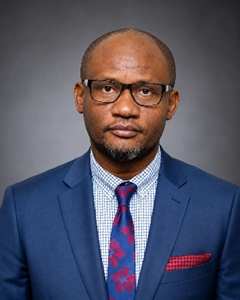
George Shadrack Kamanda served as Legal Adviser at the Permanent Mission of Sierra Leone to the United Nations during Sierra Leone’s 2024–2025 term on the UN Security Council. Sierra Leone has nominated Professor Charles Chernor Jalloh for election to the International Court of Justice.