
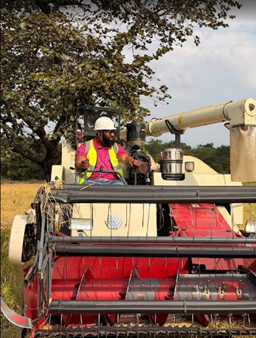
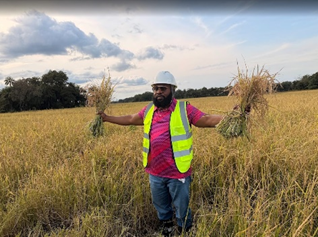
In the heart of Sierra Leone’s bustling rural communities, a new paradigm of leadership and development is taking shape—one that emphasizes active participation, community engagement, and sustainable investment in agriculture. At the forefront of this movement is Sheikh Alhaji Mohamed Omodu Kamara, popularly known as Jagaban, whose recent direct involvement in the rice harvest in Bombali District exemplifies a transformative approach to rural development. Through his grassroots engagement and strategic initiatives, Jagaban is redefining the role of leadership in fostering agricultural growth and asserting a compelling vision for Sierra Leone’s economic future.
Jagaban’s recent participation in the rice harvest in Gbendembu Town, Ngowahun Chiefdom, is not merely symbolic, but emblematic of a broader shift in development philosophy. Unlike traditional leadership models that often position leaders as distant or detached from grassroots realities, Jagaban rolled up his sleeves and worked alongside local farmers on his 160-hectare farm. This act of active involvement underscores a fundamental truth: sustainable development in agriculture cannot be achieved solely through policy declarations or top-down interventions. It requires genuine partnership, practical engagement, and a shared sense of purpose between leaders and the communities they serve.
This hands-on approach is a core component of the Sheikh’s Rural Agriculture Foundation, which supports over 250 farmers across four chiefdoms. The foundation’s multifaceted programme aims to increase food production, generate employment opportunities, and uplift rural livelihoods — efforts aligned with Sierra Leone’s national agenda of food security and rural empowerment. By integrating resource provision, technical assistance, and community capacity building, the foundation seeks to foster resilient farming communities capable of sustaining productivity and economic growth.
Jagaban’s advocacy for agriculture is deeply rooted in his background. Coming from a farming family, he understands firsthand the challenges and opportunities that rural farmers face daily. His lifelong connection to farming has instilled an unwavering belief that agriculture is not just a subsistence activity, but a vital driver of economic development. His leadership echoes the national goal of reducing dependence on imported foods, boosting domestic production, and creating a vibrant agricultural sector that can withstand external shocks.
The timing of Jagaban’s initiatives is particularly strategic, given Sierra Leone’s current challenges. The country is grappling with over-reliance on food imports, climate variability affecting crop yields, and high youth unemployment. These issues underscore the urgent need to transform agriculture from a marginal livelihood to a profitable and attractive sector for the youth. Jagaban’s active involvement demonstrates that meaningful change begins at the grassroots—where policies meet practice and where community-based solutions can flourish.
Central to Jagaban’s agricultural programme is the distribution of quality seeds, fertilizers, modern farming tools, and technical assistance. These inputs are critical for improving yields and making farming more profitable. The foundation also promotes innovative approaches such as cooperative farming and crop diversification, which help farmers reduce risk, improve resilience, and access new markets.
Beyond input provision, the foundation emphasizes capacity building—training farmers on sustainable practices that conserve soil health, optimize water use, and adapt to changing climatic conditions. This holistic approach recognizes that sustainable agriculture must integrate environmental conservation with economic viability. By equipping farmers with knowledge and resources, Jagaban’s initiatives aim to create a cycle of continuous improvement and resilience.
A distinctive feature of Jagaban’s approach is its focus on community participation, especially youth and women. Recognizing that the future of Sierra Leone’s agriculture depends on engaging the next generation, the foundation designs activities that make farming appealing and economically viable for young people. Many rural youths view farming as unattractive or unprofitable, which leads to an aging farming population and a decline in rural vitality.
To counter this trend, Jagaban’s programme demonstrates that agriculture can be a pathway to economic empowerment. By showcasing successful models of profitable farming, providing vocational training, and facilitating access to credit and markets, the foundation inspires a new generation of farmers. Similarly, gender inclusion initiatives empower women involved in farming and trading, promoting gender equality and ensuring that the benefits of agricultural growth are shared equitably.
The ripple effects of increased agricultural productivity extend beyond individual farms. Improved yields can stimulate local markets, support small and medium enterprises, and create employment opportunities—particularly for youth and women. In regions like Bombali, where farming is the main livelihood, these interventions can lead to tangible improvements in household income, access to education and healthcare, and community resilience against shocks such as food shortages or economic downturns.
Furthermore, the foundation’s activities are scaled across multiple districts, including Western Rural, Bo, Tonkolili, Moyamba, and Port Loko. This strategic geographic coverage aims to connect grassroots farming efforts with national development priorities, exemplifying how targeted community interventions can contribute to Sierra Leone’s broader goals of food security, poverty alleviation, and sustainable growth.
Jagaban’s agricultural initiatives resonate strongly with international development frameworks, notably the United Nations Sustainable Development Goals (SDGs). Specifically, SDG 2—Zero Hunger—aims to eradicate hunger through increased food production and sustainable agricultural practices. By boosting local food systems and strengthening rural livelihoods, the foundation’s work supports these global objectives.
Within Sierra Leone, the “Feed Salone” agenda—a government-led initiative—aims to enhance local food production and reduce reliance on imports. Jagaban’s efforts complement and reinforce these national strategies through private sector-led initiatives that prioritize community involvement, resource provision, and capacity building. This synergy between government policies and private initiatives exemplifies a holistic approach to agricultural development.
The narrative emerging from Jagaban’s grassroots-driven initiatives is one of hope and transformation. It challenges the notion that rural development is solely a matter of aid or external intervention. Instead, his model emphasizes local ownership, community participation, and leadership grounded in grassroots realities. His personal commitment and strategic vision serve as catalysts for change, inspiring others to follow suit.
While these efforts are promising, scaling up such initiatives requires addressing systemic challenges. Infrastructure development—such as rural roads, storage facilities, and access to markets—is vital for reducing post-harvest losses and enabling farmers to reach consumers efficiently. Ensuring affordable credit, access to modern inputs, and market linkages are also critical to sustaining momentum and expanding impact.
Fostering partnerships among government agencies, private investors, development organizations, and local communities will be essential. These collaborations can facilitate resource mobilization, technological innovation, and climate-smart agriculture practices—elements necessary to increase productivity and build resilient food systems.
As Sierra Leone continues to navigate its path toward food security and sustainable development, Jagaban’s hands-on leadership offers a compelling model. His emphasis on empowering communities, engaging youth and women, and integrating environmental sustainability aligns with both national and international priorities.
However, systemic challenges remain. Improving rural infrastructure, ensuring consistent access to affordable credit and inputs, and strengthening market linkages are urgent priorities. Addressing climate change impacts through climate-smart practices and technological innovation will also be vital for long-term resilience.
Nevertheless, Jagaban’s approach underscores a fundamental truth: sustainable development begins at the grassroots. By investing in people, providing resources, and fostering community ownership, Sierra Leone can unlock its agricultural potential and build a resilient economy capable of supporting future generations.
Conclusion
Jagaban’s active participation in the rice harvest and his leadership through the Rural Agriculture Foundation symbolize a paradigm shift in Sierra Leone’s approach to rural development. His commitment demonstrates that leadership grounded in practical involvement and community engagement can catalyze meaningful change. As the country strives to achieve food security, reduce poverty, and promote inclusive growth, initiatives like Jagaban’s serve as beacons of hope.
If scaled and sustained, his model can transform Sierra Leone’s rural landscape—turning farming from a subsistence activity into a vibrant sector that drives national prosperity. The journey toward a resilient, food-secure Sierra Leone is ongoing, but with leaders like Jagaban championing grassroots development, the future looks promising. As the nation cultivates opportunities, empowers its farmers, and invests in sustainable practices, it lays the foundation for a prosperous and inclusive future for all Sierra Leoneans.