
Dr. Kabba Identifies Persistent Gaps In Health System
By Alimatu Kargbo
Sierra Leone’s push to reduce maternal and child deaths is beginning to show measurable results across the country, with the Ministry of Health reporting significant reductions in maternal mortality in several districts, while acknowledging that major challenges remain.
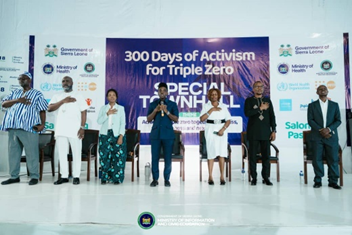
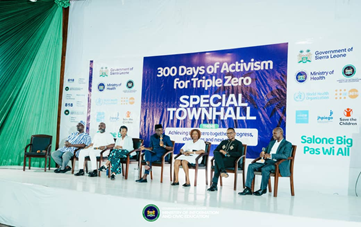
The progress was highlighted at a special town hall meeting marking 300 Days of Activism for Triple Zero, held on Tuesday, October 6, 2026, at the Miatta Civic Centre in Freetown, under the theme: “Achieving Triple Zero Together, Progress, Challenges and Next Steps.”
The event brought together health authorities, district officials, Paramount Chiefs and other stakeholders to assess progress, identify persistent challenges and discuss practical measures to prevent avoidable deaths.
Speaking at the event, Chief Medical Officer of the Ministry of Health, Dr. Mustapha Kabbah, stressed that maternal deaths must not simply be recorded as statistics, but investigated to establish exactly what went wrong and what can be done to prevent similar deaths.
Dr. Kabbah pointed to persistent gaps in the health system, including electricity and solar power, transportation, specialist training, blood services, referral systems, ambulances and drivers, medical supplies and the readiness of health facilities to manage emergencies.
He said district-level reviews are particularly important, because health workers and authorities on the ground understand the specific challenges affecting their communities and are therefore better positioned to develop practical solutions.
The Ministry’s approach is now increasingly focused on using information generated from the health system to respond more quickly to problems.
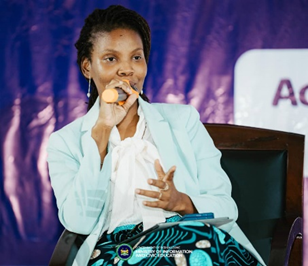
Deputy Minister of Health II, Dr. Jalikatu Mustapha, said the Ministry is moving beyond reliance on periodic health surveys, and increasingly using real-time data to identify, investigate and respond to preventable maternal and child deaths.
She explained that senior health officials and partners now meet weekly to review maternal deaths, examine what happened in each case and determine how similar deaths can be prevented.
Dr. Mustapha said the approach is already producing encouraging results, with almost every district recording reductions in maternal mortality compared with the previous year.
She highlighted Kailahun District, which she said had achieved about a 70 per cent reduction, while Bombali, Moyamba, Pujehun and Falaba recorded reductions of between 50 and 60 per cent.
Western Rural recorded between 40 and 50 per cent, while Kambia and Kenema recorded reductions of around 40 per cent, with other districts achieving reductions of between 20 and 30 per cent.
For Dr. Mustapha, the results demonstrate what is possible when investment, leadership, accountability, commitment and political will are brought together.
She noted that achieving reductions of up to 70 per cent in some districts within a relatively short period represents significant progress, particularly when compared with the much longer periods historically required to achieve similar improvements in maternal mortality.
From the district level, Dr. Steven Fornie, District Medical Officer for Kenema, highlighted the importance of taking health services closer to communities, particularly people living in hard-to-reach areas.
His contribution focused on strengthening community registration, outreach and antenatal care, improving referrals and hospital transfers, mentorship of health workers, follow-up after surgery and building partnerships to address critical needs such as blood availability.
He also pointed to innovations in Kenema and the use of integrated data to help health authorities identify problems and respond more effectively.
The role of traditional leadership was also strongly emphasized.
Paramount Chief Faya Sundifu Brima Souva IV, speaking from the perspective of the National Council of Paramount Chiefs, said Paramount Chiefs remain among the first people communities turn to when health emergencies occur, particularly in remote areas where access to health facilities can be difficult.
He said the collaboration between the Paramount Chiefs and the Ministry of Health has helped communities understand the importance of vaccination, maternal health services and early referral.
According to Chief Souva, traditional leaders are also helping pregnant women in remote communities overcome barriers to accessing care by providing accommodation and facilitating transportation to health facilities when necessary.
He said communities should not use distance from a health centre as an excuse for a woman to give birth without skilled assistance.
The Paramount Chief further disclosed that Moyamba District has, for about two decades, supported free surgical operations for people with serious medical conditions, particularly those from remote communities who cannot afford treatment.
He said about 250 free operations had been conducted in the district this year, with patients identified and supported with transportation to Freetown for treatment.
Chief Souva described the relationship between the National Council of Paramount Chiefs and the Ministry of Health as a strong partnership, saying traditional leaders would continue helping the Ministry take health messages to communities.
The statements from the health authorities and traditional leadership underscored a common message: reducing maternal and child deaths requires more than hospitals and medical personnel. It requires functioning referral systems, reliable transportation, adequate supplies, community engagement, strong leadership and timely information.
As Sierra Leone continues its Triple Zero campaign, the emphasis is increasingly shifting from simply counting deaths to understanding why they happen, where the system fails and what can be done immediately to save lives.