By Mohamed Lamin Kebbay
Sierra Leone reported it first Ebola virus case in May, 2014, in Kailahun District on the border with Guinea and Liberia. A deadly Virus that spanned between 2014 and 2015, with 8,700 people infected, claiming 3,589 lives, including 221 health workers, and left 4,051 survivors; quoting the country’s Ministry of Health. This was gruesome on children who lost their parents, parents who lost their children, husbands who lost their wives and the other way round. Survivors with invisible wounds, traumatised and neglected and can barely survive now, even when the Post Ebola recovery plan contains compensation for direct victims, including survivors.
The outbreak depreciated the economic gains at the time, as revenue declined, businesses including government’s owned businesses, collapsed. This virus affected all sectors, but more so, the nation’s health, education, tourism sectors e.t.c.
Schools and universities closed, little or no tourists came in, and for sure, tested our health sector negatively. Our health care system was overwhelmed, the strongest pillar in the fight against the deadly virus. The consequences were dire both in Sierra Leone and West African countries, predominantly in Congo, and the scars of it pose existential threats to nations that were hardly hit by the deadly virus.
In this piece let us leave or better defer the public debate of the Post Ebola recovery architecture and its seeming execution. It flaws, the success stories and the ghost ebola survivors scheme or supports, could be a thrilling topic for another day: a topic that will examine and X-ray the real issues covering Post Ebola recovery in Sierra Leone.
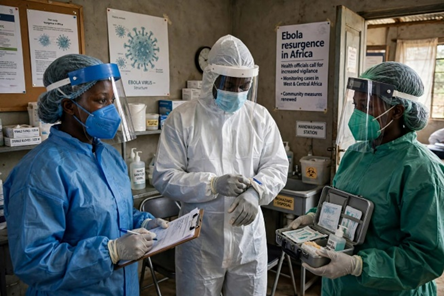
The elephant in the room and the brainer for this piece is that after Sierra Leone became Ebola virus free and in the same light, years after no trace of it in Africa, countries like Kenya, DR Congo, Uganda and quite recently Nigeria, have announced or reported a case of ebola or two. There have been strong headlines on its resurgence to the utmost attention of World Health Organisation and Centre for Disease Control, with clear warnings of it seeming danger. This development must be a clear cut warning and a clarion call to Sierra Leone’s health sector, begging the question, what is government through the Ministry of Health and its partners doing to ensure that as a nation, we don’t record a case of the new Ebola virus, which many health scholars say this new form of the virus is even deadlier than the virus’ previous state.
Are we really gearing up? or are our state institutions paying a lip-service to a potential health risk that can ravage and undermine the gains we have made to foster development and growth overtime?
At a crucial time like this, literally, there are one hundred and one things government through donor and private investments support could do to prevent the deadly virus from entering our borders through our Air, Land and Sea..
Strengthen our borders
Rigorous health checks in key places like our air and sea ports are worthy steps that would create big impact.
This can be capital intensive, but it is good business for every government to spend on prevention than to spend to cure in any course. Resources can and should be mobilised through strategic engagements with donors for possible financing through grants and aids, and monies obtained from this course must be ring-fenced. Also public-private partnerships must be sourced through investments, programs and leverages. Local revenues also can assist in mobilisation of funds to cater for the system setup so that it works and runs smoothly, not amounting to significant pressure on the Ministry of Health so they don’t deviate from their work. The National Public Health Agency can provide real time leadership, and must be equipped with resources (both human and otherwise). This and many more initiatives would enhance a zero tolerance entry of the new virus into our territory.
Put people or health officials to work and provide them the requisite support for a clean job, and monitor their performance with extreme supervision.
Where necessary, government should rehabilitate health care infrastructures for it to be fit for purpose and one that reflects resilience.
Bring into being not too severe restrictions for countries that have a trace of the re-emerged virus.
Strengthen border patrols and create a buoyant and robust surveillance regime. Engage the leadership of key sector players like the Ministry of Transport and Aviation, Ministry of Internal Affairs, Office of National Security and the National Revenue Authority, bringing them to speed. These strategic inter-Ministries, Departments and Agencies engagements and conversations must be led and spearheaded by the Office of the Chief Minister, Health ministry and the National Public Health Agency. The Office of the Chief Minister’s contribution would undoubtedly give the utmost attention and seriousness to the course.
Let it be duly noted that a “Stitch in time, saves nine”…