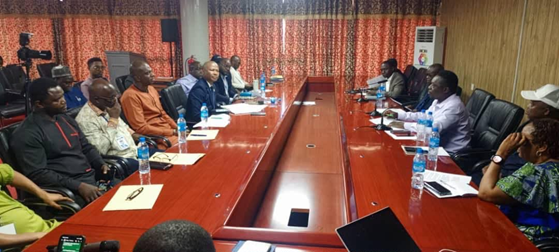
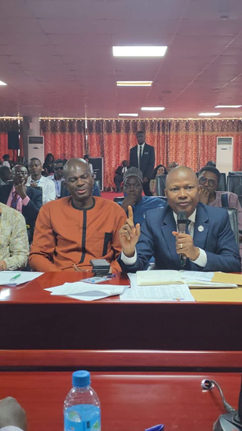
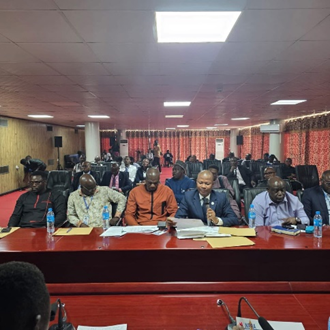
In a significant move aimed at fostering transparency, accountability, and stability within Sierra Leone’s petroleum sector, the Committee on Trade and Industry in Parliament recently held a high-level engagement with key stakeholders, including the National Petroleum Regulatory Authority (NPRA) and various Oil Marketing Companies (OMCs). The meeting served as a critical platform for discussing fuel prices, subsidies, petroleum distribution, and other operational challenges facing the country’s fuel market.
Petroleum products remain a vital commodity in Sierra Leone, underpinning the daily lives of households, businesses, transport operators, and industries. Given this centrality, members of the parliamentary committee underscored the importance of collaboration among all stakeholders to safeguard consumer interests, while ensuring the sustainability of the petroleum industry.
A key focus of the discussions was the recurring phenomenon of filling stations closing ahead of anticipated fuel price changes. Lawmakers expressed deep concern about how these closures cause panic buying, long queues, and general inconvenience—especially in suburban and rural communities, where petroleum access is more limited. The committee argued that such disruptions not only inconvenience consumers, but also risk destabilizing local economies relying heavily on consistent fuel availability.
While acknowledging the operational pressures faced by oil marketers amid volatile global energy markets, the parliamentary members emphasized that consumer welfare must never be compromised. They called on Oil Marketing Companies to maintain continuous service and enhance public communication strategies to minimize speculation and reduce public anxiety during such periods.
Representatives from the Oil Marketing Companies responded appreciatively to Parliament’s initiative to foster constructive dialogue. They apologized for any inconvenience caused by temporary station closures, and clarified that these are precautionary measures rather than deliberate attempts to create artificial shortages. The OMCs explained that rapid fluctuations in international petroleum prices compel operators to carefully manage stock to avoid significant financial losses.
Addressing common misconceptions, the marketers elaborated on the complexities of global oil pricing. Although crude oil prices may show declines in international media, the actual petroleum products imported into Sierra Leone are refined fuels, whose prices do not necessarily mirror crude oil trends. Factors such as refining costs, freight charges, insurance, storage expenses, and global supply chain logistics contribute to maintaining relatively high prices for refined fuel, despite crude oil price dips. The marketers appealed to the public for understanding of this crucial distinction.
The National Petroleum Regulatory Authority used the session to outline its ongoing efforts to stabilize the petroleum market. NPRA officials reaffirmed their commitment to implementing a fair pricing mechanism that balances the protection of consumers with the economic viability of petroleum businesses. This regulatory balance is vital; no legitimate operator should be forced to sell at a loss, yet consumers must be shielded from unjustified price hikes.
NPRA also highlighted its proactive role in monitoring market dynamics, enforcing compliance across the sector, and promoting efficient distribution of fuel nationwide. Officials pledged to continue engaging openly and transparently with both Parliament and industry players whenever challenges arise, reinforcing the principle of cooperative governance.
Appreciating the constructive participation of industry players, the NPRA commended Oil Marketing Companies for their willingness to collaborate in addressing sector-wide concerns. Such cooperation has been instrumental in maintaining a steady flow of petroleum products, even in the face of international energy market fluctuations.
Members of the Committee on Trade and Industry welcomed the frank and candid exchanges during the meeting, reiterating Parliament’s readiness to sustain dialogue with all stakeholders. They stressed that ongoing engagement between lawmakers, regulators, and industry operators remains essential to achieving a fuel market characterized by stability, transparency, and consumer-friendliness.
The session concluded with a shared commitment among Parliament, the NPRA, and Oil Marketing Companies to deepen collaboration. All parties vowed to enhance public communication, develop practical solutions to fuel security challenges, and uphold consumer protection. This alliance aims to not only shield Sierra Leoneans from disruptions, but also foster the growth and resilience of the nation’s petroleum sector amidst a complex global energy environment.
By embracing cooperation, transparency, and mutual respect, Sierra Leone’s petroleum stakeholders are taking crucial steps toward a sustainable energy future—one that places the wellbeing of consumers alongside the health of the industry at its core.