NatCA Strengthens Regulatory Oversight
By Alex Lawrence Koroma
FREETOWN, Sierra Leone — 28 October 2026 —
The National Communications Authority (NatCA) unveiled and received a suite of advanced telecommunications monitoring and regulatory systems, strengthening its capacity to oversee spectrum use, assess service quality and protect consumers, as Sierra Leone continues its digital transformation.
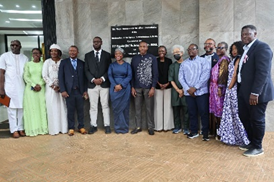
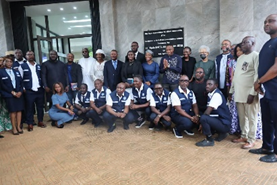
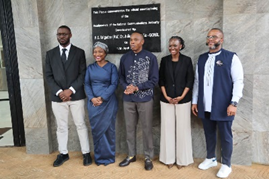
The handover took place at NatCA Tower in South Ridge, IMATT, with the Chief Minister, Dr. David Moinina Sengeh, delivering the keynote address. The event brought together the Minister of Communication, Technology and Innovation, Madam Salima Monorma Bah; government officials; the World Bank Group; telecommunications operators; civil society representatives; members of the press; and the project implementation team.
The systems were provided through the Sierra Leone Digital Transformation Project (SLDTP), funded by the World Bank Group and implemented through the Ministry of Communication, Technology and Innovation (MoCTI). The investment is intended to improve NatCA’s technical ability to manage the radio frequency spectrum, monitor licensed operators, investigate interference and assess the quality of communications services.
Speaking at the ceremony, Minister Bah linked the equipment’s role to a recent security operation targeting an alleged cybercrime network. Security forces working with NatCA announced on 27 October that they had arrested 18 people and detained about 400 others in Freetown and Kenema as part of an investigation into a suspected international cybercrime network.

“Just yesterday, there was a public announcement of a suspected cyber ring. Equipment like this helps us identify that kind of activity,” the Minister said. “It is about making sure we have our eyes and our ears out, so that our spectrum is used for what it is meant for.”
The Minister’s comments pointed to the broader importance of monitoring the communications environment—not only to regulate ordinary spectrum use, but also to help identify activity that may exploit communications infrastructure or operate outside authorised channels.
Radio frequency spectrum is the invisible resource that enables mobile phone calls, text messages, internet access, radio and television broadcasts, and many digital services, including electronic payments. As demand for connectivity increases and newer technologies such as 5G expand, the need to use this limited resource efficiently is also growing.
SLDTP Project Coordinator, Kumba Liliana Musa, compared the value of spectrum to that of the country’s mineral resources, stressing that its management requires careful planning and capable institutions. She outlined the implementation process and said NatCA’s institutional readiness, strategic direction and foundations helped position it to attract and deliver the investment.
Musa also underscored the importance of ensuring the equipment remains useful beyond the project period. Alongside the technical systems, the Ministry supported an institutional assessment of NatCA’s structure, personnel and technical skills. The assessment provides a plan for building the capacity needed to operate, maintain and make effective use of the new technology over the long term.

Systems for monitoring the airwaves and service quality
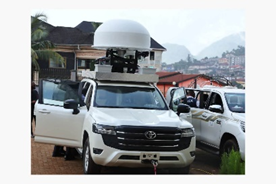
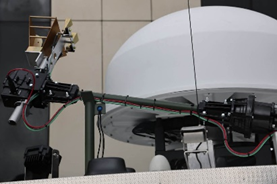
NatCA’s Director of Engineering and Infrastructure, Ing. Sahr Momodu Sewa, presented the equipment and explained how it will support the Authority’s regulatory work. The package includes a mobile spectrum monitoring system, a spectrum management system, mobile quality-of-service measurement equipment for drive testing, a spectrum analyser for broadcast signal analysis and electromagnetic field measurement instruments.
The mobile monitoring system allows NatCA engineers to take equipment into the field to investigate possible interference and unlicensed frequency use. As the monitoring vehicle moves through an area, the system can scan the airwaves, identify signals and help engineers determine whether users are operating on authorised frequencies and within approved technical limits.
The capability is particularly important when investigating interference that could affect licensed communications services. Sewa said the system can also detect signals on international distress and safety frequencies used by pilots, where interference could have serious consequences. The equipment will enable the Authority to identify suspected violations, gather technical evidence and support appropriate enforcement action under the law.
The spectrum management system will digitise processes involved in frequency allocation, licensing and planning. More structured digital records are expected to support more efficient assignments, improve oversight of spectrum use and help NatCA respond to demand from operators and other authorised users.
For consumers, the quality-of-service equipment is intended to provide a more independent way of assessing how telecommunications networks perform in practice. The drive-test system can measure network coverage, internet speeds and call quality across 2G, 3G, 4G and 5G networks. It can also test how applications such as WhatsApp and YouTube perform under real-world network conditions.
The measurements can help NatCA identify areas where service falls short of regulatory expectations. They also give the Authority a technical basis for discussing performance with operators and requiring corrective action where necessary. The equipment is expected to help establish a clearer picture of service quality across locations, rather than relying solely on reports from providers or complaints from customers.
Spectrum analysers and other field instruments will support inspections and broadcasting oversight, including analysis of broadcast signals and electromagnetic field measurements. Together, the systems are expected to improve monitoring across both telecommunications and broadcasting services.
Accountability and public benefit
NatCA Director General, Amara Brewah, described the handover as a significant step towards strengthening the regulatory environment and supporting a competitive communications industry. He thanked the Government of Sierra Leone, the World Bank, MoCTI and private-sector partners for their contributions.
Brewah said the Authority’s improved technical capability would help it identify and monitor licensed operators, detect non-compliance and address practices that could undermine consumer confidence or the integrity of the industry. He also urged licensed operators to continue working with NatCA.
The Director General emphasised that acquiring sophisticated systems is only part of the task. Their value, he said, will depend on using them consistently to produce reliable information, make sound regulatory decisions and follow up when networks do not meet required standards. The measurements, he added, will enable the Authority to require operators to take corrective action where service performance falls short.
Chief Minister Sengeh also stressed the relationship between regulatory capacity and accountability. He said stronger, independent monitoring of service quality would help NatCA hold operators to account and connect government policy with practical improvements for the public.
The Chief Minister placed the investment within the Government’s broader development agenda, including President Julius Maada Bio’s Big Five Game Changers. He highlighted the need for comprehensive planning, deliberate implementation and measurable results, while urging public institutions to protect, maintain and use public assets effectively.
He also connected reliable communications to the Government’s commitment to radical inclusion. For people in remote communities, a reliable connection can affect access to information, education, government services and economic opportunities. More consistent monitoring, the Chief Minister said, can help ensure that the benefits of improved communications are not limited to urban centres.
Minister Bah described the handover as a timely development during NatCA’s 20th anniversary year. She said it reflected sustained planning and cooperation between NatCA, the project team and the Ministry, and thanked those involved in the three years of work leading from procurement to delivery. The Authority’s move to its new headquarters was another part of the institutional development taking place during the anniversary year.
The ceremony’s proceedings were guided by NatCA’s Director of Corporate and Industry Affairs, Abdul Ben-Foday. In welcoming guests, Brewah acknowledged the support of government and development partners, as well as the contribution of industry stakeholders to the development of Sierra Leone’s communications sector.
Following the keynote address and official handover, the Chief Minister and other dignitaries toured NatCA Tower. The tour included the Data Centre, which houses servers and network equipment used to store and process the Authority’s data, and the control room, where engineers monitor spectrum use and network performance.
The unveiling marks an important addition to NatCA’s technical infrastructure at a time when demand for dependable connectivity and digital services continues to grow. The Authority will now be expected to translate the new capability into routine field monitoring, clearer evidence of network performance and timely action when regulations are breached.
For operators, that may mean more systematic scrutiny of licensed frequencies and service quality. For consumers, the intended benefit is stronger oversight and a regulator better equipped to identify persistent connectivity problems. For the country, effective management of spectrum can support a growing digital economy while ensuring that essential communications remain reliable and interference is addressed.
The investment, officials said, is not simply about acquiring equipment. It is about developing the people, systems and institutional practices needed to make the equipment work over time. With continued support from government, the World Bank Group, MoCTI and industry stakeholders, NatCA aims to strengthen its regulatory role and help build a more connected, accountable and digitally empowered Sierra Leone.