Mines Minister Seeks Stronger Russian Cooperation In Mining Sector
Sierra Leone has called for stronger cooperation with Russia to help unlock its mineral potential, improve geological exploration and ensure that the country’s natural resources contribute more directly to national development.
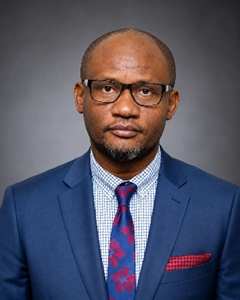
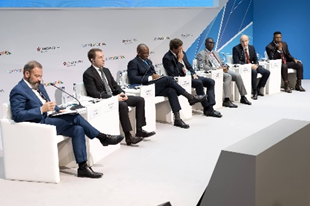
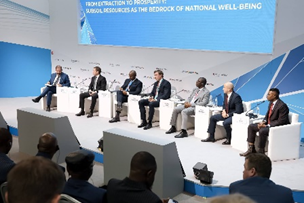
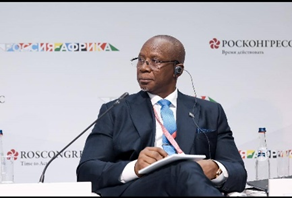
Speaking at the Russia–Africa Summit in Moscow on Wednesday, 28th October 2026, Sierra Leone’s Minister of Mines, Mr Julius Daniel Mattai, stressed that having abundant mineral resources does not automatically translate into prosperity. He said countries must invest in geological knowledge, effective governance, modern technology and the skills needed to manage their resources responsibly.
Mr Mattai noted that Sierra Leone is richly endowed with minerals, including iron ore and diamonds, and has recently identified promising critical minerals, including lithium. He also pointed to the country’s prospects for other minerals such as cobalt, nickel and coltan.
He said the challenge now is to establish more accurately what lies beneath the ground and determine how these resources can be developed for the benefit of the country and its people.
“We need to understand our geology better,” he emphasised, highlighting the importance of systematic geological surveys and drilling to turn early indications of mineral deposits into properly assessed resources and reserves.
The Minister referred to a memorandum of understanding signed in June 2024 relating to the inventory of Sierra Leone’s mineral resources, describing geological information as an important foundation for future exploration and investment.
A key message from the Minister was that Sierra Leone must look beyond simply extracting minerals and exporting them in their raw form.
He argued that greater attention should be given to the entire mineral value chain, from extraction and processing to beneficiation, smelting, refining and, where feasible, manufacturing.
According to the Minister, developing these activities could create jobs, build local expertise and allow Sierra Leone to retain a greater share of the value generated from its natural resources.
He acknowledged that achieving this ambition would require substantial investment in infrastructure, particularly reliable energy, roads and port facilities. It would also require a transparent and predictable legal and fiscal framework that gives investors confidence, while protecting the country’s interests.
He said the government was reviewing aspects of its mining legislation and recognised the importance of establishing clear rules for investors. Depending on the scale and nature of an investment, appropriate fiscal stability arrangements could also help provide the certainty needed for long-term projects.
The Hon Minister highlighted plans to strengthen Sierra Leone’s geological knowledge through modern geophysical surveys, including radiometric and magnetic surveys.
Such work, he explained, would help identify areas with mineral potential and reduce the risks associated with exploration. He also emphasised the importance of making reliable geological, geophysical and geochemical information available to support informed investment decisions.
For Sierra Leone, better geological data would not only help attract investors, but also enable the government to make more informed decisions about the development and management of its mineral resources.
He further stressed that transparency in the management of mining revenues must remain central to the sector, so that the benefits of mineral development are reflected in the wider economy.
The Minister also drew attention to Africa’s growing population and economic potential, noting that the continent’s population is projected to rise from approximately 1.5 billion today to 2.5 billion by 2050.
He said this growth would create a major market for goods and services, while providing a young workforce that could support industrial development.
Against this background, he observed that the global competition for critical minerals presents African countries with an opportunity to negotiate partnerships that go beyond the extraction of raw materials.
With much of the world’s mineral processing and refining capacity concentrated in China, he suggested that the search for more diversified supply chains could open new opportunities for African countries, provided they are prepared to develop their resources strategically.
For Sierra Leone, this means attracting investment while ensuring that partnerships contribute to local skills, technology transfer and long-term economic growth.
The Minister expressed interest in expanding cooperation with Russian universities and technical institutions, particularly in geology, geophysics, chemistry, mining engineering and mineral processing.
Drawing on his own educational experience in the former Soviet Union, he spoke of the value of academic and technical cooperation. He also referred to an engagement with a Russian state university the previous day, where opportunities relating to geological studies had been discussed.
Potential areas of cooperation include scholarships for Sierra Leonean students, staff exchanges, laboratory development, technical training and the use of artificial intelligence in geological modelling and mineral exploration.
He also identified energy as an area where cooperation could be beneficial, particularly in exploring solutions that could support industrial and mineral-processing activities.
The Minister made it clear that Sierra Leone is open to working with partners who can bring the expertise, technology and investment needed to help develop the country’s mineral sector.
The Minister’s remarks reflected Sierra Leone’s intention to engage with international partners on the basis of mutual respect, national sovereignty and shared benefits.
He stressed that the country was not interested in choosing sides in global geopolitical competition. Instead, its priority was to find partners who could help it understand, develop and benefit from its natural resources.
“We are not looking East. We are not looking West. We are not looking North or South. We are looking downward into the ground to make more discovery and move forward to make sure we prosper,” he said.
Minister Julius Mattai added that Sierra Leone’s priority is to translate its mineral wealth into tangible benefits for its people, emphasizing that the country seeks to attract investment and strengthen its geological and technical capabilities, cooperation with Russia and other international partners could provide opportunities to advance exploration, build local expertise and support the development of a more value-added mining industry.
For Sierra Leone, the ultimate measure of success will not simply be how much mineral wealth is discovered or extracted, but how effectively that wealth contributes to jobs, economic growth and lasting national prosperity.
@Communications Unit
Ministry of Mines and Mineral Resources & the National Minerals Agency (NMA)