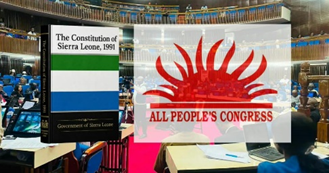


Freetown, Sierra Leone — The Citizens Advocacy Network (CAN), a prominent civil society organisation, has formally informed the Sierra Leone Police of its intention to hold a peaceful protest and procession on Wednesday, August 26, 2026. The demonstration aims to express public concern over alleged constitutional violations related to the ongoing process of amending the country’s 1991 Constitution.
In a letter dated August 17, addressed to Inspector-General of Police, William Fayia Sellu, CAN’s Executive Director, Thomas Moore Conteh, outlined the motivation behind the planned event: providing Sierra Leoneans with a platform to voice their worries and petition President Julius Maada Bio on what the organisation describes as an issue of national importance. CAN emphasises that this protest is part of its wider dedication to promoting constitutionalism, the rule of law, and the peaceful exercise of citizens’ rights.
The notification was submitted in compliance with Section 17(1) of the Public Order Act, 1965 (Act No. 46 of 1965), which legally requires organisers to notify the police in writing prior to any public procession. CAN’s adherence to this statutory requirement underscores its commitment to transparency and lawful conduct.
The planned procession route is set to start at Lumley Beach, proceeding through key city locations including Stadium Car Park, Savage Street, St. John, Sanders Street, and Siaka Stevens Street before culminating at State House. CAN expects the event to draw a significant number of participants, but stresses that the demonstration will be peaceful, orderly, and devoid of violence.
“To ensure the demonstration remains lawful and respectful, all participants will be expected to comply fully with existing laws and respect both public and private property, as well as security personnel and fellow citizens,” CAN affirmed in its communication.
Recognising the likely scale of the gathering, CAN has requested that the Sierra Leone Police undertake appropriate arrangements for crowd management, traffic control, public safety, and emergency access throughout the procession. Furthermore, the organisation has sought engagement with police officials ahead of the planned event to discuss logistics and security measures, thereby facilitating a cooperative approach to ensuring the protest’s smooth running.
The protest emerges amid intense parliamentary debates on proposed amendments to the 1991 Constitution. CAN has raised serious concerns regarding perceived procedural irregularities in how the amendment process is being handled. These concerns have galvanized civil society and citizens alike, prompting calls for greater transparency and adherence to constitutional principles.
In its letter, CAN also shared copies of the notification with a broad range of national and international stakeholders, reflecting the significance of the issue and the organisation’s commitment to inclusive dialogue. Recipients include the Speaker of Parliament, Leader of Government Business, Opposition Leader, Attorney-General and Minister of Justice, Human Rights Commission of Sierra Leone, United Nations Resident Coordinator, European Union Delegation, as well as diplomatic missions from the United States, United Kingdom, Ghana, Nigeria, The Gambia, Guinea, and Liberia. Additionally, civil society leaders, media houses (the Fourth Estate), the general public, and other relevant authorities have been informed.
This proactive step by CAN highlights the vibrancy of Sierra Leone’s democratic landscape and the vital role of civil society in holding government processes accountable. By choosing a peaceful, lawful avenue to express dissent, the organisation puts forth a model of constructive civic engagement that underpins a healthy democracy.
While concerns over constitutional amendments are often contentious and complex, the peaceful demonstration planned by CAN serves as a reminder that in a functional democracy, citizens have the right—and responsibility—to engage with governance issues openly and respectfully. The cooperation of security agencies, government officials, and the public will be pivotal in ensuring that this expression of public opinion unfolds without disruption or conflict.
As Sierra Leone deliberates on crucial constitutional changes, the eyes of the nation and the international community will be watching closely. The manner in which this protest and the broader amendment process are handled will profoundly impact the country’s democratic reputation and social cohesion.
Citizens and stakeholders alike look forward to a peaceful procession on August 26 and urge all parties involved to uphold the highest standards of legality, respect, and mutual understanding. Ultimately, safeguarding constitutional integrity and citizens’ rights remains paramount for Sierra Leone’s continued progress and stability.