



The Government of Sierra Leone has convened a two-day National Consultative Workshop to develop a comprehensive roadmap for preventing and responding to mobile money fraud and other forms of cyber-enabled financial crime.
The workshop, organised by the Ministry of Communication, Technology and Innovation in partnership with the National Communications Authority (NatCA), is being held from 18 to 19 August at the NatCA Building in South Ridge, IMATT. It brings together key stakeholders from the financial, telecommunications, law-enforcement, regulatory, civil society and private sectors.
The gathering forms part of a coordinated government response to the growing risks associated with Sierra Leone’s expanding digital financial ecosystem. As mobile money services become increasingly important to citizens for savings, remittances, bill payments and everyday transactions, concerns have also grown over fraud, identity theft, unauthorised transfers and other cyber-related abuses.
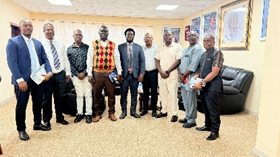
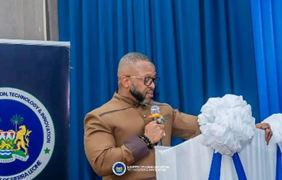
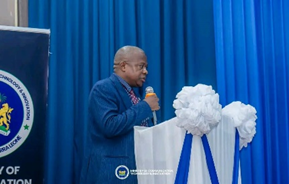
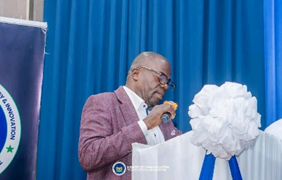
Participants at the opening session included representatives from the Financial Intelligence Agency, the Parliamentary Committee on Information and Communication Technology, the Bank of Sierra Leone, the National Communications Authority, the Ministry of Communication, Technology and Innovation, the National Cybersecurity Coordination Centre, the National Civil Registration Authority, mobile money operators, telecommunications companies, civil society organisations, government institutions and private-sector stakeholders.
The broad representation is intended to promote stronger coordination among regulators, service providers, enforcement institutions and consumer-protection bodies. Government officials said the workshop would help ensure that the national response to mobile money fraud is not handled in isolation by individual institutions, but through an integrated system involving all relevant actors.
The initiative also fulfils commitments made by the Government to Parliament following recent discussions on digital public infrastructure and interoperable digital identity systems. During those engagements, Government undertook to convene a national stakeholder forum to address weaknesses in the digital financial system and develop practical mechanisms for preventing and responding to fraud.
The roadmap under development is expected to serve as a national blueprint for protecting ordinary Sierra Leoneans who depend on mobile financial services. It will seek to clarify institutional responsibilities, improve information sharing, strengthen reporting procedures and establish more effective mechanisms for assisting victims of fraud.
The first day of the workshop featured three major panel discussions, each examining a different aspect of the mobile money fraud problem.
The first panel, titled “Consumer Voices,” examined the fraud chain from the perspective of victims. Participants identified points at which fraudulent activities often go undetected and highlighted situations where no single institution assumes clear responsibility for addressing a complaint. These gaps, stakeholders noted, are frequently exploited by criminals.
The discussion also drew attention to the difficulties faced by victims when attempting to report fraud, recover lost funds or obtain timely assistance. Participants stressed the need for clearer complaint procedures, faster institutional responses and stronger consumer awareness programmes.
The second panel, “What Institutions Know,” explored the challenges faced by agencies involved in combating cybercrime and financial fraud. Representatives from the National Communications Authority, the Financial Intelligence Agency, the National Cybersecurity Coordination Centre, the National Consumer Rights Authority and the Police Cyber Crime Unit presented their respective experiences.
The panel revealed that each institution often sees only one part of the broader fraud problem. While agencies possess information that could assist investigations and prevention efforts, many do not have timely or adequate access to data held by other institutions. Participants identified legal and regulatory gaps, weak implementation of existing policies and limited inter-agency cooperation as significant barriers.
The third panel, “Industry on Record,” brought mobile money and telecommunications operators together to discuss the safeguards already in place across their networks. Operators outlined their existing fraud-control measures, made commitments to specific implementation timelines and identified safeguards that would only be effective if adopted consistently across the entire industry.
Stakeholders acknowledged that no single mobile money operator can independently address all fraud risks. Criminals often exploit differences in security systems, verification procedures and reporting processes between networks. As a result, industry-wide standards and coordinated action are considered essential.
The findings from the three panel sessions will now be examined by four working groups. Working Group One will focus on prevention and detection, including measures to identify suspicious transactions and stop fraudulent activity before victims suffer losses.
Working Group Two will address reporting, response and victim redress. Its work is expected to include the development of clearer reporting channels, faster response mechanisms and procedures for assisting victims in recovering funds where possible.
Working Group Three will focus on monitoring, evaluation and accountability. This group will consider how progress under the national roadmap will be measured and how institutions and operators will be held accountable for implementing agreed actions.
Working Group Four will examine coordination, information sharing and legal reform. Its mandate includes identifying the legislative and regulatory changes required to strengthen collaboration among public institutions, mobile money operators, telecommunications companies and security agencies.
The workshop comes at a time when mobile money has become a vital component of Sierra Leone’s financial system, particularly for people who may have limited access to traditional banking services. Participants emphasised that maintaining public confidence in digital financial platforms will require stronger safeguards