President Bio Praises Pavi Fort Boss’ Contribution To Irrigation Development
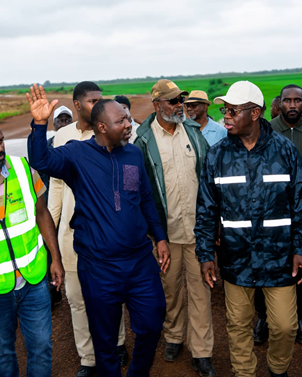
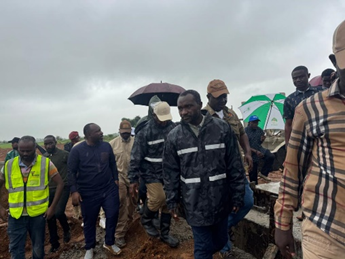
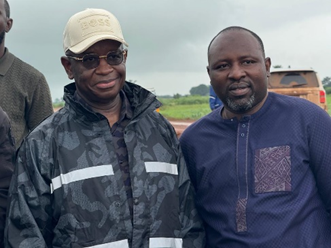
His Excellency, President Dr. Julius Maada Bio, recently embarked on a crucial working visit to Sierra Leone’s Bonthe District, focusing on the country’s ongoing efforts to revolutionize rice production and strengthen national food security. The visit underscored the government’s unwavering commitment to transforming Sierra Leone’s agricultural landscape through strategic investments, infrastructure development, and private sector engagement.
During his tour, President Bio inspected the progress of the Torma-Bum Irrigation Scheme, a flagship project aimed at creating a sustainable, large-scale rice production hub. The scheme, situated in the southwestern part of the country, is part of the broader Sierra Leone Regional Rice Value Chain Development and the Rice Agro-Industrial Cluster Projects, financed by the Islamic Development Bank (ISDB), Banque Arabe pour le Développement Économique en Afrique (BADEA), and the African Development Bank (AfDB). These projects are designed to position Torma-Bum as a pivotal center for irrigated rice cultivation, processing, storage, and marketing.
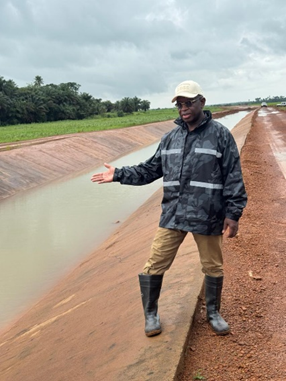
During the visit, President Bio toured key sections of the irrigation infrastructure, witnessing significant progress in water management facilities that are critical for reliable irrigation during the dry season. The Minister of Agriculture and Food Security, Dr. Henry Musa Kpaka, provided detailed updates on the ongoing construction activities, including the development of pumping stations, main and secondary canals, water-control structures, drainage channels, access roads, and land development initiatives.
Minister Kpaka emphasized that the irrigation development aims to reduce farmers’ dependence on unpredictable rainfall, thereby enabling more predictable, intensified rice production. When fully operational, the infrastructure will facilitate improved water management, expand cultivable land, and open opportunities for dry-season farming and multiple cropping cycles throughout the year.
“The first two irrigation sectors, covering approximately 2,000 hectares, encompass over 25 kilometers of main and branch canals,” the Minister explained. “Torma-Bum is being developed as an integrated agro-industrial rice cluster that connects land development and irrigation with mechanization, aggregation, processing, storage, packaging, and market access. This demonstrates our shift from seasonal, subsistence farming toward a more commercialized, private sector-led rice industry.”
Minister Kpaka highlighted that these investments reflect a strategic move towards transforming Sierra Leone’s rice sector into a vibrant, commercially driven industry. He credited President Bio’s leadership and personal dedication to the Feed Salone initiative—a government-led program aimed at increasing local rice production, reducing reliance on imports, and creating jobs.
The Minister also acknowledged the vital cooperation from the Sierra Leone Armed Forces (RSLAF), traditional authorities, farmers, private sector partners, contractors, and development agencies, all working together to realize the government’s agricultural transformation goals.
A key player in this agricultural renaissance is Pavi Fort, a Sierra Leonean construction company making significant strides in infrastructure development. The company is presently constructing a modern irrigation system in Toma Bum, a rural community in Bonthe District. This project marks a critical milestone in addressing the longstanding challenge of seasonal rainfall variability and water management during dry periods.
The irrigation infrastructure, comprising canals and water control structures, promises to give local farmers year-round access to water, thus boosting productivity and resilience against climate variability. The project aims to facilitate continuous farming cycles, increase crop diversification, and ultimately enhance food security across the region.
President Bio personally visited Toma Bum to inspect the progress of the irrigation project and assess the ongoing agricultural activities. His visit was marked by high praise for Pavi Fort and its CEO, Alimu Barrie. The President expressed his appreciation for the company’s dedication to quality and timely delivery, emphasizing the importance of such projects in Sierra Leone’s broader vision of agricultural modernization.
“I am highly impressed by the dedication and expertise demonstrated by Pavi Fort, particularly under the leadership of CEO Alimu Barrie,” President Bio remarked. “This irrigation system is a game-changer for the people of Bonthe District and the country at large. It reflects a positive step toward enabling our farmers to produce more food, improve their livelihoods, and contribute significantly to our national economy.”
CEO Barrie responded with gratitude, reaffirming Pavi Fort’s commitment to supporting Sierra Leone’s development goals. “We are honored to contribute to this critical sector, and we remain dedicated to delivering infrastructure that empowers communities and fosters sustainable growth,” he stated.
With the new irrigation system in place, farmers in Toma Bum, surrounding communities and Sierra Leoneans anticipate increased crop yields, diversification, and resilience against climate challenges. The project is expected to stimulate socio-economic development, create employment opportunities, and further position Sierra Leone as a self-sufficient rice producer.
President Bio’s visit underscores the government’s strategic vision to transform Sierra Leone into a regional hub for rice production and agro-industrial development. By investing in infrastructure, fostering private sector partnerships like Pavi Fort, and ensuring coordinated efforts across government agencies, Sierra Leone aims to achieve food security, reduce imports, and promote economic growth.
The ongoing developments in Torma-Bum and Toma Bum exemplify the country’s commitment to turning agricultural potential into tangible progress. As these projects advance, Sierra Leone moves closer to realizing its goal of becoming a resilient, food-secure nation capable of feeding its people and contributing to regional stability and prosperity.