In a remarkable display of regional solidarity and commitment to inclusive peacebuilding, Sierra Leone hosted a pivotal capacity-building workshop on July 8, 2026, aimed at enhancing national efforts to monitor and report progress on the Women, Peace, and Security (WPS) agenda. This event marked a significant step in operationalizing commitments made under international and regional frameworks, emphasizing the vital role of women in sustaining peace, security, and development across West Africa.
The workshop, held at Hotel Bamoi in Sierra Leone’s capital, brought together a diverse array of stakeholders, including government officials, representatives from civil society organizations, regional partners, and development agencies. Its core objective was to deepen understanding of the Continental Results Framework (CRF), a tool developed by the Economic Community of West African States (ECOWAS) to facilitate effective implementation, monitoring, and reporting of WPS commitments at the national level.
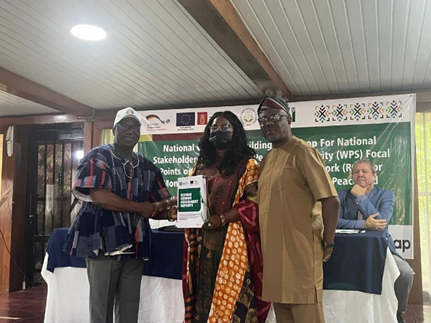
The event also served as a platform for the presentation of key regional reports, including the ECOWAS Gender Assessment Report, which was officially handed over to Sierra Leone’s Minister of Gender and Children’s Affairs, Dr. Isata Mahoi. Her participation underscored Sierra Leone’s position as a regional leader in advancing gender equality and women’s participation in peace processes.
Ambassador John Azumah, the Resident Representative of the ECOWAS Commission in Sierra Leone, delivered a compelling keynote address that emphasized the importance of collaboration and capacity-building in achieving meaningful progress in WPS. “This workshop is focused on strengthening capacity and collaboration among national stakeholders in advancing Sierra Leone’s commitments to the Women, Peace, and Security agenda,” Azumah stated. “Our collective efforts are vital in ensuring women’s voices are central to peacebuilding and security processes.” He praised Sierra Leone’s notable progress, highlighting the establishment of the Peace Commission, the enactment of the Gender Equality and Women’s Empowerment (GEWE) Act of 2022, and other legislative strides as evidence of the country’s commitment to inclusive governance.
Sierra Leone’s achievements in this regard reflect a broader regional and continental commitment to integrating gender perspectives into peace and security frameworks. These efforts are aligned with Sustainable Development Goal 16 (SDG 16), which advocates for peace, justice, and strong institutions, emphasizing the importance of gender equality as a pillar of sustainable development.
Dr. Azumah further underscored that “the full inclusion and empowerment of women are essential for sustainable peace in Sierra Leone and the wider region.” He lauded the nation’s legislative strides, notably the GEWE Act, which ensures women’s representation across decision-making platforms and promotes gender-sensitive policies. This legislative framework not only institutionalizes gender equality, but also provides a foundation for practical action on the ground.
The workshop also echoed regional commitments articulated in ECOWAS Vision 2050 and the African Union’s Agenda 2063, both of which emphasize peace, prosperity, and gender equality as interconnected objectives. As Sierra Leone continues to serve as a regional exemplar for peacebuilding, ECOWAS reaffirmed its unwavering support, emphasizing that “strong national ownership of these processes is essential to translating commitments into tangible outcomes.”
In her keynote speech and official launch of the training, Minister of Gender and Children’s Affairs, Dr. Isata Mahoi, lauded Sierra Leone’s leadership in advancing the WPS agenda. “We are the first nation to co-chair the Security Council forming an expert group on women, peace, and security,” the minister stated. She highlighted the country’s comprehensive approach, which includes the adoption of three national action plans on UN Security Council Resolution 1325, legislative reforms addressing gender-based violence, and the enactment of landmark laws such as the Child Rights Act, the Prohibition of Child Marriage Act, the Customary Land Rights Act, and the National Land Commission Act.
“Our policies are not enough,” Minister Mahoi emphasized. “We must translate these policies into tangible results. That requires robust systems, capacities, and accountability mechanisms—precisely why this training is critical.” She called for continuous monitoring and evaluation of the implementation of national action plans, emphasizing that women’s issues must be prioritized in all peace and security efforts.
The Minister’s remarks resonated with the broader regional and international discourse on gender equality and peacebuilding. Since the adoption of UN Security Council Resolution 1325 in 2000, global recognition has grown regarding the disproportionate impact of conflict on women and girls and the critical role women play in peace processes. Building on this foundation, ECOWAS and the African Union developed frameworks such as the CRF to enhance accountability and track progress toward WPS commitments at the national and regional levels.
However, despite normative advances, challenges persist. Weak monitoring and evaluation systems, limited technical capacity, and inadequate data collection have hampered the full realization of WPS goals. Recognizing these gaps, the workshop was designed to equip national stakeholders with the necessary tools and skills to operationalize the CRF, including the Simplified CRF tool developed by ECOWAS, supported by the ECOWAS Peace, Security and Governance Project, co-funded by the European Union and the German Federal Ministry for Economic Cooperation and Development, and implemented in partnership with GIZ.
Over the three-day event, participants engaged in comprehensive sessions aimed at strengthening national monitoring and evaluation systems, fostering collaboration among government agencies, civil society, and development partners, and promoting accountability. The ultimate goal is to ensure that the contributions of women to peace and security are visible, recognized, and integrated into policymaking and implementation.
Dr. Ibrahim Mohammed, Acting Director of the Department of Humanitarian and Social Affairs at ECOWAS, articulated the strategic importance of operationalizing the CRF. “This is not just a technical exercise,” he said. “It is a critical step toward sustainable implementation of WPS commitments, aligning our regional efforts with global priorities for gender-responsive peace and security governance.” He further emphasized that strengthening accountability mechanisms and data collection processes is essential to measuring the impact of policies and ensuring that commitments translate into meaningful change.
Sierra Leone’s progress in this area is noteworthy. The country has demonstrated leadership through the development and implementation of successive National Action Plans on UN Security Council Resolution 1325, institutionalizing gender focal points across ministries and security agencies, and fostering partnerships with civil society organizations. These efforts have resulted in increased women’s participation in decision-making processes at both national and local levels, as well as legislative reforms to address gender-based violence and promote survivor-centered support mechanisms.
Furthermore, Sierra Leone’s commitment extends beyond legislation. The country actively promotes women’s leadership in post-conflict recovery, community resilience, and peacebuilding initiatives. Such holistic approaches exemplify the country’s dedication to embedding gender perspectives across all facets of governance and security.
ECOWAS’s broader regional efforts also recognize the integral role of women in humanitarian response and resilience-building. The region faces ongoing challenges such as displacement, food insecurity, climate change, and conflict, which disproportionately affect women and girls. ECOWAS prioritizes integrating WPS principles into humanitarian interventions, ensuring that women are not only protected, but also empowered as agents of recovery and resilience. The linkage between humanitarian response and WPS underscores the understanding that sustainable peace cannot be achieved without addressing the immediate needs of vulnerable populations and fostering women’s leadership in shaping recovery processes.
In closing, the workshop represents a strategic and timely response to the persistent challenges faced in monitoring and implementing WPS commitments. By strengthening national capacities, fostering regional cooperation, and embedding gender perspectives into peace and security frameworks, Sierra Leone and ECOWAS are paving the way toward a more inclusive, peaceful, and resilient West Africa.
As the region advances, the emphasis remains clear: operationalizing the CRF is more than a technical task; it is a strategic investment in the future of peace, security, and gender equality. The collective efforts of governments, regional bodies, civil society, and development partners will determine the trajectory toward sustainable peace—one that fully recognizes and harnesses the leadership and contributions of women.
This ongoing collaboration exemplifies how regional and national actors can work together to turn commitments into concrete actions, promoting a future where women’s voices are at the heart of peace and security across West Africa and beyond.