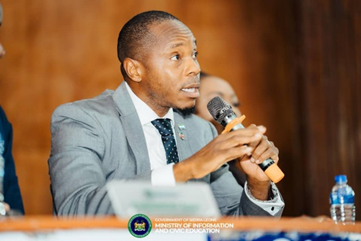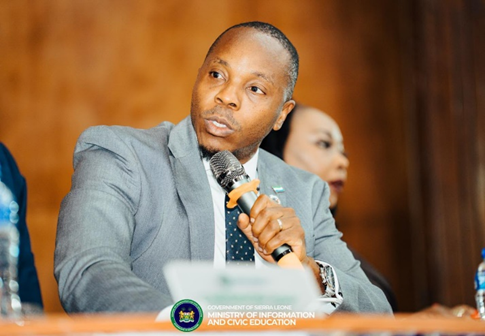
Court Reporters Association Adopts New Constitution
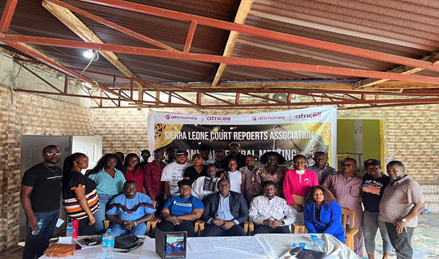
The Sierra Leone Court Reporters Association (SLCRA) has adopted a new Constitution and appointed an interim executive committee during its Annual General Meeting (AGM) held on Saturday, 30 May 2026, in Makeni, Northern Sierra Leone.
The meeting, held under the theme: “Professional Court Reporting: A Pillar for Accountability in the Justice System,” brought together members of the judiciary, legal practitioners, journalists, court reporters and other stakeholders to discuss the role of professional court reporting in promoting transparency, accountability and public confidence in the justice system.
One of the key resolutions of the AGM was the adoption of the Association’s new Constitution, followed by the dissolution of the outgoing executive and the appointment of an interim executive committee headed by Mr. Alieu Vandy Kaisamba. The interim leadership has been tasked with managing the affairs of the Association and preparing for elections to be conducted by the Sierra Leone Association of Journalists Electoral Commission (SLAJEC).
In his welcome address, outgoing SLCRA President, Mr. Salifu Isaac Success Benrian Conteh, described court reporting as an indispensable pillar of judicial administration. He said the integrity, transparency and credibility of the justice system depend largely on the accuracy and reliability of court records.
He noted that court reporters are more than record keepers, describing them as custodians of truth, fairness and accountability, whose work ensures judicial proceedings are accurately preserved for review, appeal and public scrutiny.
Mr. Conteh further stressed that accurate court reporting safeguards the rights of litigants, supports judicial decision-making and strengthens public trust in legal institutions. He urged members to improve their professional competence, embrace technological innovations and adapt to emerging trends, including digital documentation and virtual court proceedings.
President of the Sierra Leone Association of Journalists (SLAJ), Alhaji Manika Kamara, described court reporting as one of the most specialised fields of journalism. Drawing from his experience as a former court reporter, he said the profession offers immense opportunities for growth and excellence.
He emphasized the need for professional independence in the relationship between journalists and the judiciary, and called on the judiciary to provide continuous training on complex legal issues. He also encouraged the Association to expand its membership across the provinces to strengthen the profession and increase opportunities for national and international recognition.
Representing Chief Justice Komba Kamanda, Judiciary Communications Director, Mr. Elkass Sannoh, commended the outgoing executive for successfully organizing the AGM. A former court reporter himself, he acknowledged the challenges associated with covering court proceedings and praised court reporters for helping the public understand the work of the judiciary.
Mr. Sannoh noted that many journalists avoid court reporting because of its legal complexities, but emphasized that court reporters remain vital to promoting transparency and strengthening public confidence in the justice system. He disclosed that the Judiciary’s Communications Directorate has worked closely with court reporters to improve their recognition and access within the sector.
Also addressing the gathering, State Counsel, Rachael Adama Samba, Acting Customary Law Officer for the North-East Region, represented the Director of Public Prosecutions (DPP). She reaffirmed the commitment of the Office of the DPP to supporting initiatives aimed at strengthening professional court reporting and enhancing public understanding of the justice system.
Speaking on behalf of Women in the Media Sierra Leone (WIMSAL), Regional Chairperson, Madam Edna Amie Ngegba, described court reporting as a specialised and essential area of journalism that ensures justice is not only done, but is seen to be done. She advocated for greater participation of women in court reporting and called for mentorship and capacity-building opportunities for young female journalists.
Madam Ngegba also pledged WIMSAL’s continued support in promoting gender inclusion, professionalism and skills development within the media sector.
Florence Umu Kanu Bah, Regional Representative of the Sierra Leone Reporters Union (SLRU), described court reporting as a crucial bridge between the judiciary and the public. She emphasized that professionalism, patience, courage and accuracy are essential qualities for court reporters, and warned that inaccurate reporting can undermine public confidence in the justice system.
She identified three key pillars necessary for sustaining professional court reporting: People, Systems and Value, highlighting the importance of training, strong institutional frameworks and greater recognition of court reporting as a vital service to justice and accountability.
The AGM concluded with discussions on implementing the newly adopted Constitution and exploring strategies to strengthen professionalism, ethical conduct, institutional development, capacity building and collaboration among court reporters and stakeholders in the justice sector.
The event received support from several judicial and private-sector partners, including Chief Justice Komba Kamanda, Solicitor General, Osman Ibrahim Kanu, Justice Momoh Jah Stevens, Justice Mark Ngegba, Principal Magistrate, Mustapha Briamah Jah, Magistrate Adama Kanneh, the ECOWAS Community Court of Justice, M.R. Distilleries and Africell.